Cormorants and other water birds such as herons, geese and ducks can cause serious damage in fish farms, reservoirs, ponds, swimming pools, docks, lawns and areas close to water. They may feed on fish, dirty surfaces, damage gardens or settle in resting zones when they find food and calm conditions.
The right way to act is with non-harmful deterrent methods, adapted to the bird and the setting. A cormorant in a fish farm is not managed in the same way as a heron in an ornamental pond or ducks in a swimming pool. This page helps you choose the most suitable solution for your case.
To review other species, return to Bird Species. To compare sound equipment, see Sonic Bird Repellers, and for laser solutions visit Laser Bird Deterrents.
Protected water birds: an important note
Before acting, keep in mind that many water birds may be protected or subject to specific regulation. For great cormorants, herons and other birds linked to aquatic habitats, do not use harmful methods or act on nests, eggs or colonies without first checking the applicable rules and, where appropriate, consulting the competent authority.
For this reason, we recommend non-harmful deterrence: bioacoustic sound, laser, sprinklers, physical barriers and visual stimuli. This information is general guidance and is not legal advice.
Which solution to choose for cormorants and water birds
| Problem |
Recommended solution |
Comment |
| Cormorants in a fish farm, reservoir, pond or fishing area |
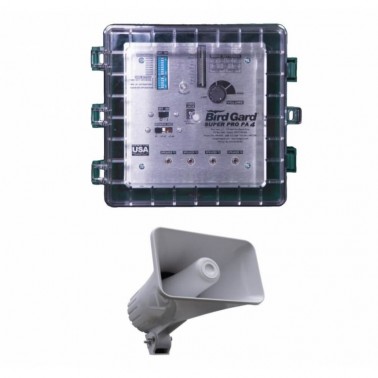
Bird Gard Super Pro PA4 - Waterfowl Repeller + Agrilaser Handheld |
Specific bioacoustics for water birds and a long-range laser are one of the strongest combinations for large water surfaces. |
| Herons in ponds with fish or koi carp |
Motion Activated Sprinkler + Floating Pond Protectors |
The sprinkler deters the heron when it approaches. Floating protectors help prevent direct access to fish and their product page is useful for availability, technical information and future restocking. |
| Ducks in pools, gardens or lawns |
Motion Activated Sprinkler |
It surprises them with a water jet and helps prevent the area from becoming a resting place. |
| Geese on lawns, parks, lakes or golf courses |
Bird Gard Super Pro PA4 - Waterfowl Repeller + Agrilaser Handheld + Hawk ScareCrow - Eolo |
In large open areas, combine sound pressure, laser action and visual reinforcement. |
| Water birds in crops close to water |
Bird Gard Super Pro PA4 - Waterfowl Repeller or Bird Laser Repeller |
The choice depends on whether the main problem is on the water surface, in the crop or in resting zones. |
| Small domestic pond |
Motion Activated Sprinkler or Floating Pond Protectors |
In small ponds, a localised solution is often more effective than a high-coverage bioacoustic unit. |
| Building, facility or indoor area with water birds perching |
Bird Laser Repeller or Agrilaser Handheld |
Laser deterrence can be useful indoors or in areas where birds perch at specific points. |
How to repel cormorants in fish farms, reservoirs and fishing areas
The cormorant is highly efficient at fishing. In fish farms, reservoirs, ponds, rivers, lagoons or fishing areas, it can cause major losses if it finds easy food and little pressure.
For this type of setting, the most suitable approach is to combine several stimuli:
- Specific bioacoustic sound: the Bird Gard Super Pro PA4 - Waterfowl Repeller is designed for cormorants, herons, egrets, geese, ducks and other water birds.
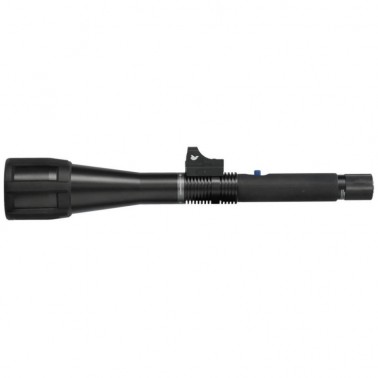
- Long-range laser: the Agrilaser Handheld allows targeted action on birds perched or present on a water surface, especially at dawn and dusk.
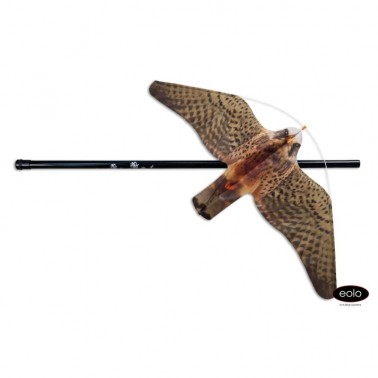
- Visual reinforcement: the Hawk ScareCrow - Eolo can help as a complement on banks, open areas, lawns or crops close to water.
The combination of sound, laser and visual stimulus usually performs better than any single method, especially when birds have already included the area in their routine.
Bioacoustic sound for water birds
The Bird Gard Super Pro PA4 - Waterfowl Repeller is the specific bioacoustic unit for cormorants and other water birds. It emits sounds that birds associate with danger and helps create pressure in the protected area.
It is especially suitable for fish farms, reservoirs, irrigation ponds, lakes, fishing areas, farms close to water, green areas with geese and facilities where water birds perch or rest.
Installation should be adapted to the shape of the site, obstacles, usual entry direction of the birds and distance to homes or sensitive areas.
Laser for cormorants, geese and large water surfaces
Laser is a very interesting tool for water birds because it works at a distance and can be directed towards birds on the water, on the bank or in resting zones.
The Agrilaser Handheld is especially useful on large surfaces, fish farms, reservoirs and fishing areas, particularly when birds gather at dawn or dusk. The Bird Laser Repeller can be considered in more controlled areas, large interiors or recurring perching points.
Like any method, laser equipment must be used correctly and in suitable conditions. In full sun or strong ambient light, its visual effect may be lower than during low-light hours.
Herons in ponds: how to protect fish and koi carp
Herons can become a serious problem in ornamental ponds, especially where fish, koi carp or other fish are visible from the bank. If the heron learns that it can feed easily, it may return repeatedly.
For domestic ponds, we recommend localised, non-harmful solutions:
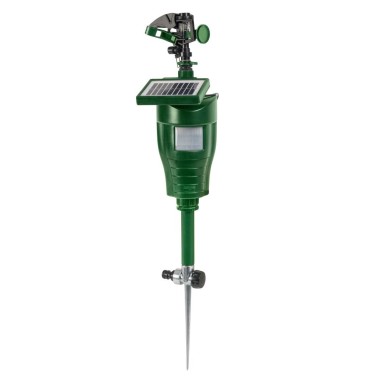
- Motion Activated Sprinkler: detects the animal and surprises it with a water jet, helping the bird stop seeing the pond as a calm area.
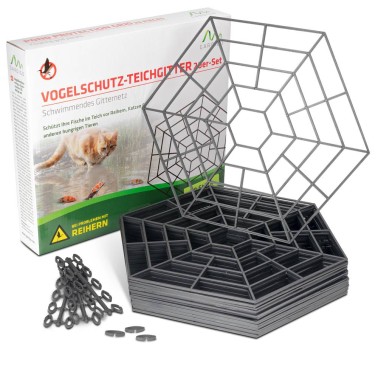
- Floating Pond Protectors: create a physical barrier on the water to make it harder for the heron to reach the fish. If they are temporarily unavailable, the product page still provides availability, technical details, videos, reviews and future restocking information.
In many ponds, combining water deterrence and physical protection is more logical than installing a high-coverage sound device.
Ducks in pools and gardens
Ducks may settle in pools, gardens, lawns or areas with water if they find a calm place to rest. The usual problem is dirt, droppings and repetition: if the pool feels comfortable, they may return.
For ducks in pools or gardens, the main solution is usually the Motion Activated Sprinkler. When triggered as the bird approaches, it creates an immediate, non-harmful and localised disturbance.
- Do not feed them.
- Remove food remains from the garden or terrace.
- Cover the pool when it is not in use.
- Make comfortable access to the water more difficult.
- Maintain pressure for several days so they do not adopt the area as a refuge.
Geese on lawns, parks and golf courses
Geese can cause significant damage on lawns, parks, lakes, banks, green areas and golf courses. In addition to feeding on grass, they soil the area with droppings and may settle in groups if the site offers water, food and calm.
In these cases, combine Bird Gard Super Pro PA4 - Waterfowl Repeller for bioacoustic pressure, Agrilaser Handheld for action at a distance and Hawk ScareCrow - Eolo as visual reinforcement in open areas.
The key is not to let the group settle. If birds already use the lawn as a regular resting or feeding area, maintaining pressure and varying stimuli becomes more important.
Visual reinforcement in open areas
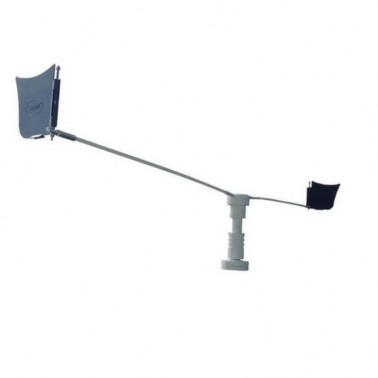
The Hawk ScareCrow - Eolo simulates a bird of prey in flight. It can be useful as a complement on banks, lawns, crops near water, open areas or resting points.
It is not a substitute for bioacoustic sound, laser or physical barriers when the problem is serious. Its role is to reinforce the feeling of threat and help reduce habituation when combined with other methods.
How to prevent water birds from getting used to deterrents
Cormorants, herons, geese and ducks can get used to a stimulus if it is always the same or if they learn that there is no real risk. To improve effectiveness, vary the strategy and act on what makes the area attractive.
- Act as early as possible: it is easier to deter birds before they turn the area into a routine site.
- Combine methods: sound, laser, water, physical barriers and visual reinforcement depending on the case.
- Change locations: move visual deterrents or change action points if birds adapt.
- Reinforce key hours: dawn and dusk are often important for feeding and movement.
- Reduce attractants: accessible food, calm conditions, comfortable perches or easy access to water.
- Size the solution correctly: a small pond is not the same as a fish farm or reservoir.
Related cases and guides about cormorants and water birds
The BirdGard Iberia blog includes guides and related cases that can help you understand which solution fits each bird and setting:
Frequently asked questions about cormorants and water birds
How do I repel cormorants from a fish farm or reservoir?
For fish farms, reservoirs and large water surfaces, combine a specific bioacoustic unit for water birds with a long-range laser. In open areas, visual reinforcement can be added.
What equipment works for water birds?
A specific bioacoustic unit for water birds is suitable for cormorants, herons, egrets, geese and ducks. The solution can be completed with laser, sprinklers or physical barriers depending on the setting.
How can I stop cormorants eating fish?
In fish farms, reservoirs or fishing areas, use combined pressure: specific bioacoustic sound, laser during high-activity hours and visual reinforcement where the environment allows it.
Does laser work against cormorants?
Yes. Laser can work very well on cormorants, especially on water, banks and open areas, and particularly at dawn or dusk.
How do I protect a pond from herons?
For ponds with fish or koi carp, use a motion activated sprinkler and floating pond protectors to make it harder for the heron to reach the fish.
How do I repel ducks from a pool?
Use a motion activated sprinkler, remove food remains, avoid feeding the ducks and cover the pool when it is not in use.
How do I repel geese from a lawn?
On lawns, parks, lakes or golf courses, a combination of bioacoustic sound, laser and visual reinforcement usually works best. Act before the group settles.
Are cormorants and herons protected?
Many water birds are protected or subject to specific regulation. Check applicable rules before acting and prioritise non-harmful deterrence.
Can harmful methods be used against water birds?
We do not recommend harmful methods. They can affect protected or non-target species and may have legal consequences.
What solution do I need according to water surface size?
Small ponds usually need sprinklers or physical protection. Fish farms, reservoirs and large water surfaces usually require bioacoustic sound, laser and visual reinforcement according to the case.
Water bird deterrent solutions at BirdGard Iberia
At BirdGard Iberia you will find non-harmful solutions for cormorants, herons, geese, ducks and other water birds: specific bioacoustic sound, laser, sprinklers, physical barriers and visual reinforcement. If you want to choose correctly for your fish farm, reservoir, pond, pool, lawn or property, contact us and we will advise you free of charge.

 3 reviews