If you find snakes, lizards, geckos or other reptiles in your home, garden, plot or rural property, it is usually because they are looking for shelter, moisture or food. The most effective and respectful way to keep them away is not to eliminate them, but to remove what attracts them and deter them. On this page, we explain how to prevent their presence, how to act safely and which products can help.
Before you act: safety and protected species
Many reptiles are harmless and beneficial, as they feed on insects, rodents and other small animals. In many regions, reptiles may also be protected or subject to conservation regulations. For that reason, the goal should always be to prevent, deter and keep them away, not to harm or kill the animal.
Depending on the country or region, some venomous snakes may be present. Even so, the safest approach is the same in every case: do not try to pick up, handle or kill the snake. Give it space so it can move away on its own and, if it is inside the house or you are unsure what to do, contact trained professionals, local wildlife services or the competent authorities.
We also do not recommend using poisons. They can be dangerous for pets, children and non-target wildlife, and they do not fit with responsible reptile management, especially when dealing with wild or protected species.
Which solution should you choose depending on the problem?
Before choosing a product, it is important to identify what type of reptile is appearing and where the problem occurs. This table will help you get oriented quickly:
| Problem |
Most suitable solution |
When it fits best |
| Snake in the garden |
Prevention, removal of hiding places and vibration-based repeller |
When snakes appear outdoors, in grass, plots or areas with vegetation. |
| Reptiles near the house |
Sealing entry points and smell-based repellent |
When they appear near doors, walls, terraces, patios or façades. |
| Lizards or geckos |
Reduce insects, seal cracks and use smell-based repellent as support |
When they enter the house or gather on walls, terraces or areas with night lighting. |
| Snake inside the house |
Do not handle it and contact professionals |
When the animal is in a room, garage, storage area or enclosed space. |
| Large outdoor area |
Vibration-based repellers for snakes |
When you want to protect gardens, plots, vegetable gardens or outdoor passage areas. |
| Recurring presence |
Prevention, removal of shelters, food control and repellent |
When the problem repeats because there is moisture, insects, rodents or hiding places. |
How to prevent the presence of reptiles
With reptiles, prevention is usually the most effective method. The idea is to make the area less attractive by reducing shelter, food and moisture:
- Cut the grass regularly: in short grass, snakes feel more exposed and usually avoid the area.
- Avoid excessive watering: moisture attracts worms, slugs, frogs, insects and other small animals that may become food for reptiles.
- Prune bushes and low branches: prevent them from touching the ground and becoming hiding places.
- Do not stack firewood near the house: firewood, large stones, rubble and accumulated materials are ideal shelters. Keep them as far away from the house as possible.
- Do not leave pet food outside: it can attract rodents, and rodents can attract snakes. Store food in sealed containers.
- Avoid large decorative stones next to the house: if you have recurring problems, small gravel or finer stone is usually less attractive as a hiding place.
- Control water areas: ponds, fountains, water bowls or very damp areas can attract insects, amphibians and small animals.
- Seal cracks and holes: check façades, low walls, door gaps, joints, garages, storage rooms and utility passages.
- Reduce insect presence: lizards and geckos often appear where there are insects attracted by lights, moisture or organic waste.
Products to deter reptiles
As support for prevention, there are two main types of solutions. It is important to understand the difference, because not all products work in the same way for all reptiles:
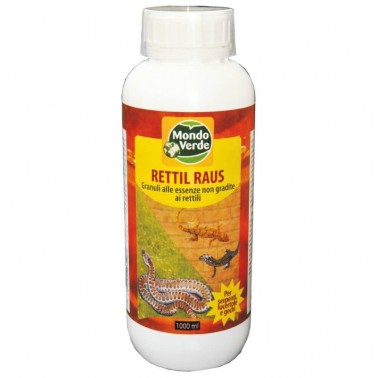
- Smell-based repellents: they create an unpleasant olfactory barrier that helps keep snakes, lizards, geckos and other reptiles away from specific areas. This is the most versatile option, as it can be used as support at entry points, terraces, patios, walls, garages, storage rooms or perimeters. You can use the Snake and Lizard Repellent, available in our repellents section.
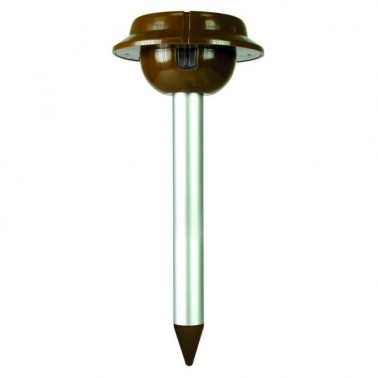
- Vibration-based repellers: these are placed in the ground and emit light vibrations that can help deter snakes outdoors. The Solar Snake Repeller covers between 450 and 600 m². It is important to keep in mind that this type of device is mainly designed for snakes, which can detect ground vibrations, and not for lizards or geckos. It works best when combined with prevention, removal of hiding places and reduction of food sources. More information in pest repellers with vibrations.
What to do if you see a snake
If you see a snake in the garden, the best thing to do is stay calm, avoid approaching it and leave it a clear escape route. In many cases, the animal will leave on its own if it does not feel cornered. Keep children and pets away and avoid any attempt to handle it.
If the snake is inside the house, in a closed garage or in a place where it cannot easily leave, do not try to capture it yourself. Contact trained professionals, local wildlife services or the competent authorities so it can be removed safely.
Frequently asked questions about how to keep snakes and reptiles away
How do I keep snakes away from the house?
The most effective approach is to remove shelter and food: cut the grass, remove firewood and stones where they can hide, seal cracks and control rodents. As support, you can use a smell-based repellent and, outdoors, a vibration-based repeller. If there is a snake inside the house, do not handle it and contact professionals.
What smells do snakes hate? Do home remedies work?
Snakes and other reptiles dislike certain strong smells, and this is the principle behind both some home remedies and formulated repellents. Home remedies may provide temporary relief, but their effect is usually short-lived and rain or irrigation can wash them away. A prepared repellent can be applied in a more controlled way; even so, prevention remains the most important step.
Do vibration-based snake repellers work?
They can help with snakes, which detect ground vibrations, especially outdoors in gardens, plots, vegetable gardens or passage areas. They are not a standalone solution and they do not work in the same way for all reptiles: they are not designed for lizards or geckos. They should be used as a complement to prevention, not as a substitute for removing shelters and sealing entry points.
How do I keep geckos or lizards out of the house?
Geckos and lizards often appear where there are insects, especially near outdoor lights, windows, terraces or walls. To reduce their presence, seal cracks, install door strips or insect screens, reduce insect entry and avoid lights that attract too many insects at night. As support, a smell-based repellent can be used at specific entry points or hiding places.
How do I know if a snake is dangerous and what should I do?
The safest approach is not to get close, not to try to identify it by handling it and not to kill it. Some snakes are harmless, while others may be venomous depending on the region. Give the animal space to leave and, if it is inside the house or you are unsure, contact professionals or the competent local services.
Can I use poison against snakes?
We do not recommend using poison against snakes or other reptiles. It is dangerous for pets, children and non-target wildlife, and it does not fit with responsible management of wild species. The appropriate approach is prevention, sealing entry points, reducing hiding places and using non-harmful deterrents.
Solutions to keep reptiles away at BirdGard Iberia
At BirdGard Iberia, you will find respectful solutions to deter snakes, lizards, geckos and other reptiles: smell-based repellents and vibration-based repellers, always as support for prevention. If you are not sure which option is best for your case, contact us and we will advise you free of charge.

 8 reviews