Rabbits can cause significant damage in vegetable gardens, gardens, fruit trees and crops: they gnaw shoots, bark and vegetables, dig the soil and may create burrows. On this page, we explain how to keep them away using non-harmful methods, ordering the different solutions according to their real usefulness, and how to capture them responsibly if necessary. First, it is worth making an important clarification about this species.
The rabbit: it can cause local damage, but it is a native species
The European rabbit is native to the Iberian Peninsula and plays a key role in our ecosystems: it is an essential prey species for animals such as the Iberian lynx and the Spanish imperial eagle. In its native range, rabbit populations have suffered strong declines and the species has great ecological and conservation value, even though it can cause serious agricultural damage locally. It only behaves as an invasive species in places where it was introduced, as happens in some countries outside its natural range.
For this reason, the right approach is to deter rabbits and protect crops without harming the animal, leaving population control, where applicable, to hunting regulations and the competent authorities. This information is for guidance only and does not constitute legal advice.
Which solution should you choose depending on the problem?
Before choosing a product, it is important to know which area you want to protect and how rabbits are getting in. This table will help you get oriented quickly:
| Problem |
Most suitable solution |
When it fits best |
| Rabbits in a vegetable garden or garden |
Physical barrier reinforced with ultrasonic devices with flash or water |
When you want to protect a specific area continuously and without harming the animal. |
| Damage to fruit trees or young trees |
Physical trunk protection, repellent and complementary deterrence |
When rabbits gnaw bark, shoots or young plants. |
| Entry through a specific point |
Physical barrier, ultrasonic device aimed at the passage area or smell-based repellent |
When rabbits always enter through the same passage, gap or edge of the plot. |
| Small garden or residential area |
Ultrasonic device with flash, motion-activated sprinkler or a combination of both |
When you want a discreet, automatic and non-harmful solution. |
| Large property or crop |
Sound repeller combined with light or reinforcement by zones |
When you need to cover a larger surface and reinforce deterrence at night. |
| Need for occasional capture |
Live capture cage trap |
Only as a controlled management tool, always checking the applicable regulations. |
How to keep rabbits away from the vegetable garden, garden or field
There is no single method. The most effective approach is usually to combine a structural solution, such as a barrier, with an active deterrent. In vegetable gardens and gardens, ultrasonic devices with flash can be a very effective complement when they are placed correctly: close to the passage area, aimed at the point where rabbits enter and without obstacles blocking the signal.
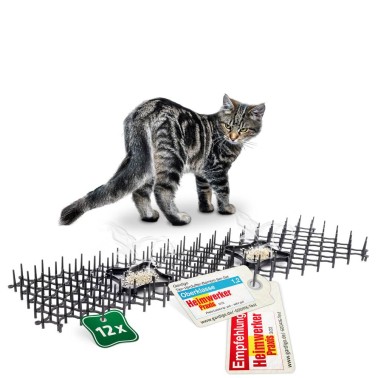
- Physical barriers and fencing: perimeter mesh, preferably buried a few centimetres into the ground, is one of the most reliable solutions for protecting a vegetable garden, crop or flower bed, because rabbits can dig. Fence spikes can also help protect specific passage or access points, always without harming the animal. You can see more options in physical barriers.
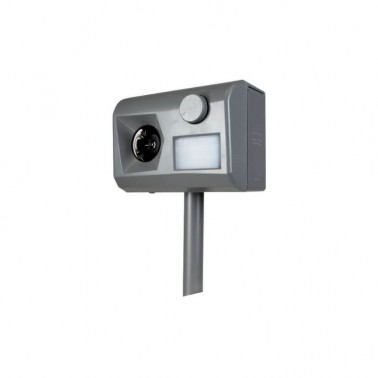
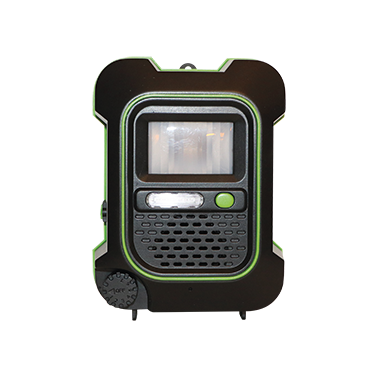
- Ultrasonic devices with flash: devices such as the Garden Protector 4 with Flash detect the animal’s movement and emit ultrasound, reinforced with a light flash. In our experience, they can give very good results in vegetable gardens and gardens, especially when placed low, well oriented and covering the area where rabbits enter. They work best as a complement to a physical barrier or as reinforcement at passage points, and it is advisable to move them from time to time to reduce the risk of habituation. More information in ultrasonic animal repellers.
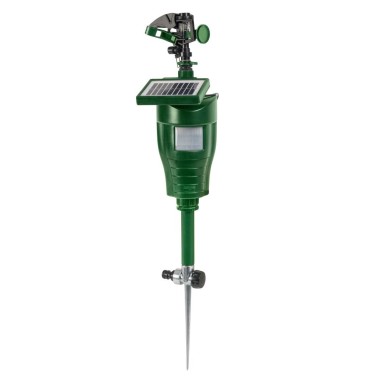
- Water: the motion activated sprinkler detects the animal and surprises it with a jet of water. It is a very deterrent solution for gardens, vegetable gardens and specific areas, provided you have access to a water supply. More information in water-based animal repellers.
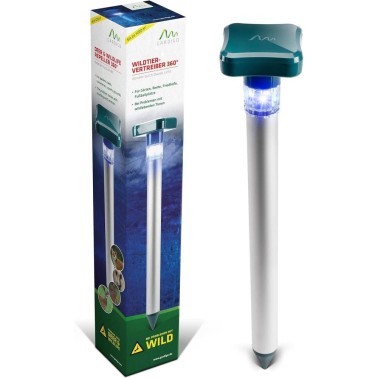
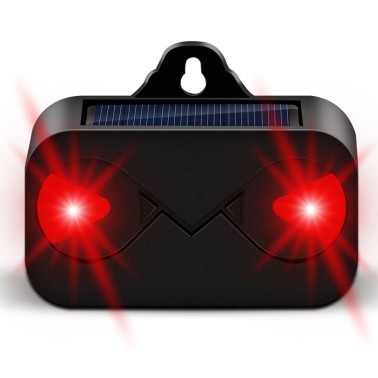
- Deterrent light: rabbits are mainly crepuscular and nocturnal, so light flashes can help make the area less attractive at night. You can use the Blue Light Wildlife Repellent or the Wild Animal Repeller with Flashing Red Light. More information in deterrent lights.
- Smell-based repellents: these create an olfactory barrier that may be unpleasant for rabbits, especially at entry points or specific areas. This is also the category where many home remedies, such as vinegar, belong, although formulated repellents are usually applied in a more controlled way. You can see more options in repellents.
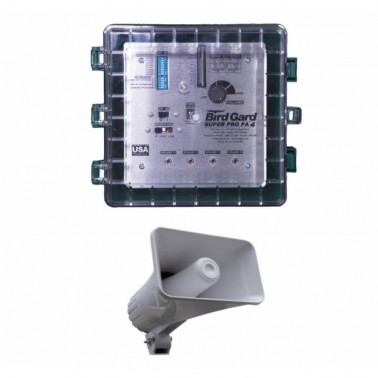
- Audible sound: for rural properties, extensive crops or large areas, the Super Pro PA4 - Boar, Deer, Rabbit Repellent offers wide coverage, up to 2.4 hectares. It is an interesting option when you need to protect a large area and not just a specific point. More information in sonic pest repellers.
Real experience in a vegetable garden with ultrasound
On our blog, we share the case of a customer with two small vegetable gardens in a rural area near Zaragoza, where rabbits were entering despite the area being fenced and eating the tomato seedlings. The recommended solution was to install an ultrasonic repeller with flash in each vegetable garden, placed almost at ground level and aimed at the passage area.
According to his experience, the device worked from the first day and rabbits stopped entering the vegetable garden. You can read the full case here: how to keep rabbits away from the vegetable garden.
Capturing rabbits without harming them
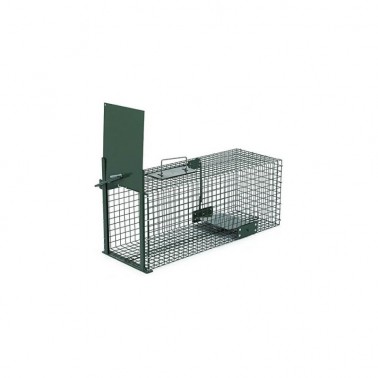
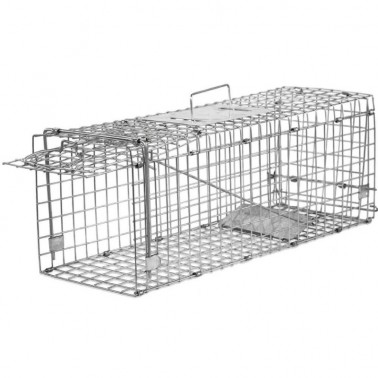
If you need to remove a rabbit occasionally, cage traps allow live and non-harmful capture. You can use the Rabbit Trap Cage, with guillotine door and anti-bite design, or the Folding Trap Cage, available in several sizes. Place it in passage areas and check it frequently so the animal does not remain inside longer than necessary. You can see them in traps.
Capture should be used as a controlled management tool, not as an improvised way to remove animals without criteria. Always check the applicable regulations and avoid irresponsible releases. If in doubt, consult the competent authority or specialised professionals.
Frequently asked questions about how to keep rabbits away
How do I keep rabbits away from the vegetable garden?
The most effective approach is to protect the perimeter with mesh or fencing, preferably slightly buried because rabbits can dig, and reinforce it with an active deterrent. In vegetable gardens and gardens, ultrasonic devices with flash can be an excellent complement if they are placed close to the passage area and properly oriented. They can also be combined with water sprinklers, deterrent lights or repellents.
What smells do rabbits hate? Does vinegar work?
Rabbits dislike some strong smells, which is why home remedies such as vinegar are often used. They may provide temporary relief, but their effect is short-lived: rain and irrigation wash them away and they need to be reapplied often. A formulated repellent is applied in a more controlled way, although in a vegetable garden, physical barriers and active deterrents are usually more reliable.
What bait should I use in a rabbit trap?
As rabbits are herbivores, plant-based and sweet-smelling baits usually work well: carrot, apple, fresh cabbage or lettuce leaves, alfalfa or other fresh vegetables. Place the bait at the back of the cage, in areas where rabbits already move, and check the trap frequently.
Do ultrasonic devices work with rabbits?
Yes, they can work very well as a complement in vegetable gardens, gardens and specific areas, especially when the device includes a flash and is placed close to the passage area. They should not be understood as a magic or universal solution: effectiveness depends on placement, the absence of obstacles and the level of pressure from the animal. To improve results, it is advisable to combine them with physical barriers, water, light or repellents and move them from time to time.
What is the best way to protect young trees from rabbits?
The most recommended approach is to physically protect the trunk and the base of the tree, especially during the first stages of growth, and reinforce the area with repellents or deterrents if there is strong pressure. Rabbits can gnaw bark and seriously damage young trees, fruit trees and recent plantations.
Is it legal to capture or eliminate wild rabbits?
The rabbit is a native species and its management is regulated. To protect a crop, the appropriate approach is to use non-harmful deterrent methods and, where applicable, live capture managed responsibly. Population control, through hunting or regulated captures, falls under hunting regulations and the competent authorities. This information is for guidance only and does not constitute legal advice; if in doubt, consult the relevant authority.
Rabbit repellent solutions at BirdGard Iberia
At BirdGard Iberia, you will find a complete animal-friendly range to keep rabbits away: barriers, ultrasonic devices with flash, water, light, sound, repellents and cage traps. If you are not sure which solution best fits your vegetable garden, garden, rural property or crop, contact us and we will advise you free of charge.

 18 reviews