
Silverfish
 1 review
Silverfish are small nocturnal insects with an elongated, silvery body that appear indoors when they find humidity, darkness and starchy materials. They do not bite and are not usually a health risk, but they are annoying and can damage paper, books, cardboard, photographs, textiles and stored clothes.
The key to controlling silverfish is not only trapping them, but correcting the condition that allows them to settle: humidity. This page explains how to reduce their presence, where to place traps, how to protect books and documents, and how to prevent them from returning. For other domestic insect problems, return to Pest Control - Insects.
What to do depending on where silverfish appear
| Situation | What it may mean | What to do |
|---|---|---|
| They appear in the bathroom | There may be high humidity, poor ventilation or accumulated water. | Ventilate, dry surfaces, check for leaks and place traps in dark corners. |
| They appear in the kitchen | They find humidity, organic residues or shelter behind furniture and appliances. | Clean residues, control humidity and place traps in transit areas. |
| They appear near books, paper or cardboard | They have available food in the form of cellulose, glues or starches. | Store documents, books and cardboard in closed boxes and reduce humidity. |
| They appear at night | This is normal: they are nocturnal insects and come out in low light. | Place traps along their usual routes and check where activity concentrates. |
| They appear frequently | The home offers humidity, darkness and food continuously. | Combine humidity control, order, traps and natural repellent as support. |
| There are many specimens | There may be a stable source in a damp or hidden area. | Check bathrooms, kitchens, basements, storage rooms, cracks, skirting boards and poorly ventilated areas. |
What silverfish are
Silverfish are wingless, nocturnal insects that hide during the day in cracks, skirting boards, corners, joints, gaps behind furniture and dark areas. At night they come out to feed.
Their name comes from their silvery colour and fast movements. Although they are unpleasant to find, they are not like cockroaches or bed bugs: they do not bite and do not feed on blood.
Why silverfish appear indoors
Silverfish appear when they find three favourable conditions: humidity, darkness and food. That is why they are common in bathrooms, kitchens, basements, storage rooms, laundry rooms, cupboards, libraries, shelves and poorly ventilated areas.
Seeing silverfish is often a sign of an environment that is too humid or poorly ventilated. They are not usually a major health risk, but it is best to act early because they can slowly reproduce and damage sensitive materials.
Where silverfish hide
- Bathrooms: behind sanitary fixtures, under sinks, in joints, corners and condensation areas.
- Kitchens: under cabinets, near pipes, behind appliances and in low cupboards.
- Basements and storage rooms: especially with humidity, cardboard boxes or poor ventilation.
- Shelves and libraries: where they find paper, cardboard, glues and shelter.
- Cupboards and stored clothing areas: especially when humidity is present.
- Skirting boards, cracks and joints: small spaces where they hide during the day.
What silverfish eat and what they can damage
Silverfish feed on materials rich in starch, cellulose and certain glues. They can affect items that are often stored for years without being checked.
- Paper, cardboard and stored boxes.
- Books, documents and photographs.
- Bookbinding glues or wallpaper paste.
- Textiles, stored clothes and fabrics with organic residues.
- Food residues, crumbs or starches.
Humidity is the key to controlling silverfish
The weak point of silverfish is humidity. Traps help capture them and detect where they concentrate, but if humidity is not corrected, they can keep appearing.
In dry environments they have much more difficulty settling, reproducing and staying active. Before thinking about insecticides, check ventilation, leaks, condensation, pipes, drains, basements and closed areas.
How to eliminate or reduce silverfish at home
- Ventilate every day: especially bathrooms, kitchens, laundry rooms and closed areas.
- Reduce humidity: use a dehumidifier if needed and avoid persistent condensation.
- Repair leaks and drips: check pipes, taps, traps, joints and areas under sinks.
- Dry surfaces: do not leave floors, shower trays, sinks or corners wet for long periods.
- Organise storage areas: avoid storing cardboard, paper or textiles in damp areas.
- Protect books and documents: store paper, photographs and clothes in closed containers.
- Place traps: they capture specimens and identify the most active areas.
- Use natural repellent as support: it can help create a barrier in transit areas.
Silverfish traps without insecticides
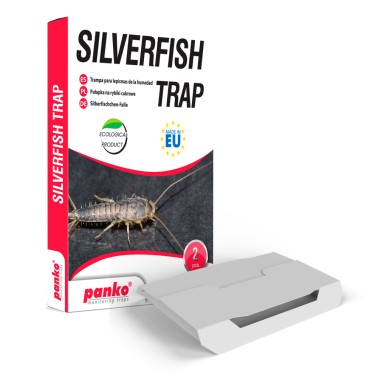
Silverfish traps are a simple way to capture them without spraying insecticides indoors. They use an adhesive surface: the insect enters, attracted by the bait, and becomes trapped.
The Silverfish Trap is useful in homes, bathrooms, kitchens, basements, storage rooms, cupboards and areas where activity is detected. Since it works without sprayed insecticide, it is a more controlled indoor option when placed out of reach of children and pets.
Besides capturing insects, traps help identify where silverfish move. If one trap catches many specimens, that area probably combines humidity, darkness or food.
Where to place silverfish traps
- Bathroom corners: especially near damp or poorly ventilated areas.
- Under washbasins and sinks: if humidity or pipes are nearby.
- Behind furniture and appliances: dark, quiet areas.
- Near skirting boards and cracks: they usually move along edges and walls.
- On shelves or near books: if they appear around paper, cardboard or documents.
- In cupboards and storage rooms: especially where there are clothes, cardboard or poor ventilation.
- In basements and laundry rooms: if they are damp and dark.
Do not move the traps every day. Leave them for several days in strategic points to detect activity.
Natural repellent as support
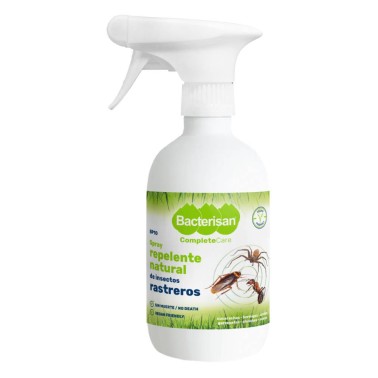
The Natural Crawling Insect Repellent can be used as a complement in transit areas, entrances, corners, cracks, skirting boards or points where you want an odour barrier.
It should not be understood as the only solution if humidity persists. Its role is to make certain areas less attractive while you correct the main cause: humidity, shelter and available food.
Do you need insecticide to eliminate silverfish?
Normally, insecticide is not the first option. Because silverfish depend heavily on humidity, the most logical approach is to dry the environment, improve ventilation, organise storage and place traps.
Insecticides may kill visible specimens, but they do not correct humidity or remove shelters. If those conditions remain, silverfish can return. In persistent cases, professional advice may be useful.
What not to do if you have silverfish
- Do not rely only on insecticides: if humidity remains, the problem can reappear.
- Do not store cardboard in damp areas: it provides food and shelter.
- Do not keep books or documents in damp storage rooms without protection.
- Do not ignore leaks or condensation: humidity is the main factor.
- Do not place traps in open areas: they work better in corners, edges and transit zones.
- Do not only clean the surface: check cracks, skirting boards, pipes, cupboards and hidden areas.
Frequently asked questions about silverfish
How can I eliminate silverfish at home?
The most effective approach is to reduce humidity, ventilate, repair leaks, store paper and clothes in closed containers and place adhesive traps in damp, dark areas.
Why do silverfish appear?
They appear because they find humidity, darkness and materials to feed on, such as paper, cardboard, books, glues, textiles or food residues.
Are silverfish dangerous?
They are not usually dangerous to health: they do not bite or transmit diseases. The main issue is that they can damage books, documents, photographs, cardboard and stored clothes.
Where do silverfish hide?
They hide in cracks, skirting boards, corners, bathrooms, kitchens, basements, storage rooms, behind furniture, near pipes, shelves and dark humid areas.
What do silverfish eat?
They feed on materials rich in starch and cellulose, such as paper, cardboard, books, glues, photographs, textiles and food residues.
Do silverfish traps work?
Yes. They are useful for capturing silverfish without insecticides and for locating the areas where they concentrate.
Where should I place silverfish traps?
Place them in bathroom and kitchen corners, under sinks, behind furniture, near skirting boards, shelves, cupboards, storage rooms and damp dark areas.
Does humidity attract silverfish?
Yes. Humidity is one of the main factors. Reducing humidity is key to controlling the problem.
Do I need insecticide to eliminate them?
Usually not. The most important steps are controlling humidity, improving ventilation, organising storage and using traps.
How can I prevent silverfish from returning?
Keep the home ventilated, reduce humidity, repair leaks, avoid storing cardboard or paper in damp areas and check bathrooms, kitchens and storage rooms regularly.
Silverfish solutions at BirdGard Iberia
At BirdGard Iberia you will find insecticide-free traps and natural repellent to control silverfish indoors in a practical and respectful way. You can also browse our insect pest control solutions. If you have questions about your case, contact us and we will advise you free of charge.