Woodpeckers, also called woodpecker birds, can damage country houses, sheds, eaves, beams, timber facades and nut crops such as almond trees. They drill or drum on surfaces with their beaks and, when they insist on the same point, they can cause holes, noise, wood deterioration and recurring disturbance.
To repel woodpeckers effectively, and without harming them, it is important to understand first why they are pecking. They may be looking for food, drumming to mark territory or trying to make a nest. The right solution changes according to the cause. To compare this species with other bird problems, return to Bird Species.
Which solution to choose for woodpeckers
| Problem |
Recommended solution |
Comment |
| Pecking on facade, eave, beam or timber house |
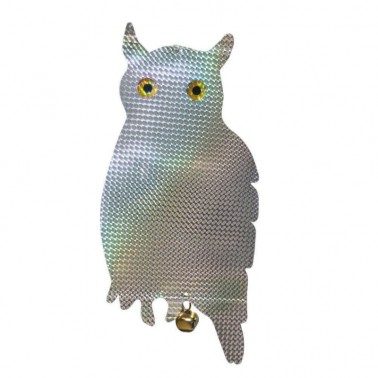
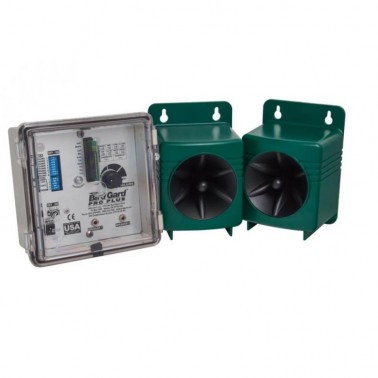
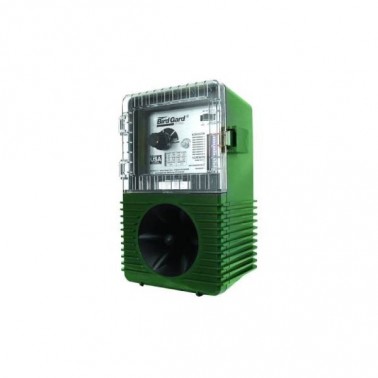
Bird Gard Pro + Bird Blinder Reflective Hanging Owl |
Recommended when damage is persistent or the bird returns to the same point. It combines bioacoustic sound and visual stimulus. |
| Drumming on gutter, sheet metal, downpipe or metallic surface |
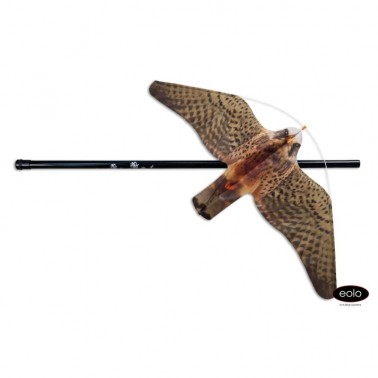
Bird Blinder Reflective Hanging Owl or Hawk ScareCrow - Eolo |
Often a seasonal territorial behaviour. Act directly on the exact point where the bird drums. |
| Localised problem in a shed, balcony, small garden or reduced area |
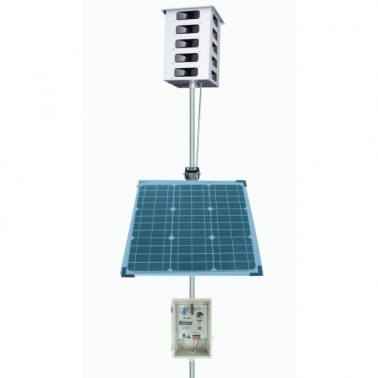
Solar Sonic Bird Repeller - WK0109 |
Practical option for specific points, with sounds, LED flash, motion sensor and solar power. |
| Woodpeckers in almond trees, orchards or crops |
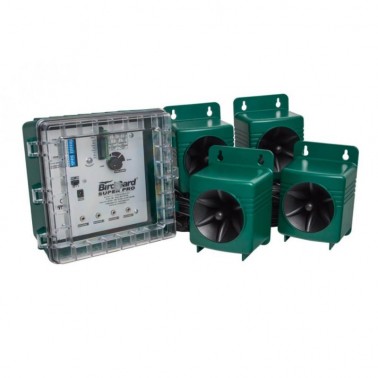
Bird Gard Pro, Bird Gard Pro Plus or Bird Gard Super Pro |
The model depends on the surface to protect and bird pressure. |
| Farms, estates or large agricultural areas |
Bird Gard Super Pro Amp - Mega Blaster Pro |
High-coverage equipment for agricultural or professional applications. |
| Large hole or possible nest |
Regulatory review before acting |
Active nests should not be handled without authorisation. First check the situation and applicable rules. |
Why do woodpeckers peck wood?
A woodpecker does not always peck for the same reason. Identifying the cause is the key to choosing the right solution and preventing the problem from returning.
- Looking for food: it drills into wood to reach larvae, woodworm, termites or other wood-boring insects. Small, irregular holes in several areas may indicate insects in the wood. In that case, alongside deterrence, treat the underlying cause.
- Drumming to mark territory: especially in spring, it rapidly strikes surfaces that resonate well, such as gutters, sheet metal, downpipes or metal elements. It is not necessarily looking for food or making holes; it is making noise to mark territory or attract a mate.
- Making a nest: it excavates larger, rounder holes in eaves, beams, trunks or wooden structures. This is less common, but the damage may be greater and requires particular caution because these birds may be legally protected.
Why has it chosen my house?
A woodpecker usually insists on a house, shed or facade for one of these reasons: the wood contains insects, the surface resonates well for drumming or there is a suitable place for nesting.
Before installing a repeller, inspect the exact point: facade, eave, beam, gutter, downpipe, tree, trunk or crop area. The better you identify the reason, the more effective the solution will be.
How to repel woodpeckers effectively
The most effective strategy combines deterrence with direct action on the attacked point. Woodpeckers are often loyal to a precise area, so placing a device far from the problem is rarely enough.
- Act on the exact point: place visual or sound stimulus close to the area where the bird pecks or drums.
- Use bioacoustic sound for persistent problems: bioacoustic equipment emits alarm and predator sounds that birds interpret as danger signals.
- Reinforce with visual elements: reflective owl and moving hawk deterrents help create a visual deterrent presence.
- Inspect the wood: if the bird is looking for food, there may be wood-boring insects. Treating that issue is an essential part of the solution.
- Protect or repair holes when appropriate: always after checking there is no active nesting and while respecting applicable rules.
- Clean the area when possible: remove debris, feathers or droppings without handling active nests or protected elements.
Bioacoustic systems for houses, farms and crops
Bioacoustic repellers are suitable when the woodpecker problem is recurrent, affects a wide surface or occurs in crops such as almond trees, orchards or agricultural estates.
Sound should be aimed at the area where woodpeckers perch, enter, drum or damage the wood. If the problem is limited to one very specific point, a smaller device or a combination with visual deterrents at the attacked point may be enough.
To compare this type of solution, see Sonic Bird Repellers.
Reflective owl and Hawk ScareCrow - Eolo as visual reinforcement
Woodpeckers often insist on precise places. Visual elements can therefore be very useful when installed exactly where the bird drums, pecks or perches.
The Bird Blinder Reflective Hanging Owl can help on facades, eaves, sheds, trees or localised pecking points. Its reflections and visual presence create discomfort in the attacked area.
The Hawk ScareCrow - Eolo is interesting in open areas, estates, crops, large gardens or spaces where it can move with the wind.
Combining sound deterrence with visual reinforcement creates a stronger effect: birds hear alarm or predator sounds and also see a visual presence associated with danger.
You can also see Visual Bird Repellers.
WK0109 for localised problems
The Solar Sonic Bird Repeller - WK0109 can be practical for localised problems in sheds, balconies, small vegetable gardens, gardens or specific spots where the woodpecker appears occasionally.
It combines sounds, LED flash, motion sensor and solar power, so it can disturb the bird when it approaches the protected point. Because it is activated by presence, it is especially useful when the problem is concentrated in a reduced area.
If there is persistent damage to wood, crops or structures, evaluate a bioacoustic solution and reinforce it with visual elements placed directly at the attacked point.
Woodpeckers in almond trees and crops
In almond trees, orchards or agricultural estates, woodpeckers may damage trees while looking for food or insisting on specific points. In these cases, size the area correctly and choose suitable sound equipment.
For small surfaces, Bird Gard Pro may fit. If the area is larger or speakers need to be aimed at different points, consider Bird Gard Pro Plus or Bird Gard Super Pro. For large agricultural areas, Bird Gard Super Pro Amp - Mega Blaster Pro may be the most suitable option.
In crops, reinforce the most affected points with visual elements, vary the position of stimuli and act early before the bird incorporates the area into its routine.
Can I cover the hole made by a woodpecker?
If the hole is not an active nest and there are no birds inside, repairing or protecting the damaged area may be considered. However, if nesting is possible, do not handle it without checking the applicable rules or consulting the competent authority.
Covering the hole without any deterrence may not solve the problem. The woodpecker may peck another nearby point if the cause remains: insects in the wood, a resonant surface or a suitable nesting place.
Protected woodpeckers: no poison
Woodpeckers may be protected birds depending on country and region. We do not recommend harming, capturing or poisoning them. Poison is non-selective and dangerous for other birds, pets, wildlife and people, and it may have serious legal consequences.
Active nests, eggs or chicks should not be handled without authorisation. The right route is always non-harmful deterrence, combined with repair or treatment of the underlying cause when appropriate. This information is general and is not legal advice.
What to avoid with woodpeckers
- Do not use poison: it is dangerous, non-selective and may have legal consequences.
- Do not cover holes before checking for nesting: birds, eggs or chicks may be inside.
- Do not rely only on a fixed object: birds may get used to it if there is no movement, reflection or sound.
- Do not ignore possible insects in the wood: if food remains available, the bird may return.
- Do not install the repeller far from the problem: it must act on the point where the bird pecks or drums.
Related guides about woodpeckers
For more information, our blog includes guides and related cases about woodpeckers, crops and bioacoustic deterrents:
Frequently asked questions about woodpeckers
How do I repel a woodpecker?
Combine a sound or bioacoustic repeller with visual elements placed at the exact point being attacked. Also address the cause: inspect the wood for insects and only repair holes when it is legal and safe to do so.
Why is it pecking the wood of my house?
It may be looking for larvae or insects, drumming to mark territory or excavating a nest. Identifying the reason helps choose the right solution.
Why does it drum on a gutter or metal sheet?
In spring, woodpeckers strike resonant surfaces to mark territory or attract a mate. Gutters, sheet metal and downpipes are noisy, so they may choose them for drumming rather than feeding.
Are woodpeckers protected?
They may be protected depending on local rules. Do not harm, capture, poison or handle active nests without authorisation. Use non-harmful deterrence.
What should I do if a woodpecker makes holes in the facade?
First identify whether it is feeding, drumming or trying to nest. Then install sound and visual deterrence at the attacked point. If holes are large or a nest is possible, check regulations before covering or intervening.
Can I cover the hole made by a woodpecker?
It can be considered if there is no active nesting and no bird inside, while respecting applicable rules. After repair, install deterrents to reduce the risk of new pecking nearby.
Do visual deterrents work against woodpeckers?
Yes, especially when placed exactly where the bird is acting. They work better with reflections, movement or sound if the problem is persistent.
Does WK0109 help repel woodpeckers?
It can support small or localised problems because it combines sounds, LED flash and a motion sensor. Persistent damage to wood, crops or structures usually needs a broader bioacoustic and visual strategy.
What should I do if they peck almond trees or other fruit trees?
Use bioacoustic equipment sized to the surface and reinforce the most affected points with visual elements. Act early and vary stimuli to reduce habituation.
Can insects in the wood attract a woodpecker?
Yes. Larvae, woodworm, termites or other insects can attract woodpeckers. Alongside deterrence, inspect and treat the wood if needed.
Is poison recommended against woodpeckers?
No. Poison is dangerous, non-selective and may affect other birds, pets, wildlife and people. Use non-harmful deterrence and check local rules.
Solutions for repelling woodpeckers at BirdGard Iberia
At BirdGard Iberia you will find non-harmful solutions for woodpeckers in houses, sheds, timber facades, almond trees and crops: bioacoustic systems, localised solar support, reflective visual deterrents and moving hawk reinforcement. If you are unsure which solution fits your case, contact us and we will advise you free of charge.

 63 reviews