Physical barriers for animals do not try to deter through sound, ultrasound, light or water. They work by blocking, limiting or making access to a specific area uncomfortable. They are practical when you already know which point needs protection and you need constant defence against passage, climbing, digging or animal damage.
Among the types of animal repeller, physical barriers are especially useful for localised problems: cats climbing trees, animals entering through gaps, small mammals near a vehicle, passage points in gardens or ponds that need protection. They are not intended to cover large areas on their own, but they can be very effective when installed in the right place.
When to choose a physical animal barrier
A physical barrier is a good fit when the problem is localised and you can act directly on the vulnerable point. Unlike other deterrents, it does not depend on the animal reacting to a stimulus: it blocks, limits or makes access difficult.
| Situation |
Recommended barrier type |
Why it fits |
| Cats entering over walls, fences, planters or passage points |
Fence Spikes for Cats |
They help protect specific access points by making the surface uncomfortable without ultrasound, water or chemicals. |
| Cats climbing trees |
Tree Guard to Stop Cats |
It prevents cats from climbing the trunk and helps protect trees, nests, fruit or raised garden areas. |
| Martens, weasels, rodents or other small animals near a car |
Animal Repellent Mesh |
It can be placed as point protection to make access harder around vulnerable vehicle or garage areas. |
| Ponds with fish exposed to cats or other predators |
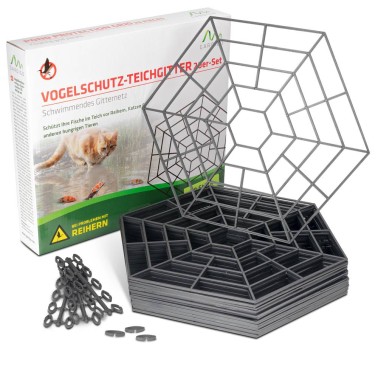
Floating covers, mesh or pond barriers adapted to the water surface |
The key is to create a physical layer that reduces direct access to the fish without leaving easy approach points. |
| Animals entering through gaps, under structures or small openings |
Mesh, grids, closures or barriers adapted to the entry point |
The real access point must be closed. If another gap remains open, the animal may simply go around the barrier. |
| Large animals on estates or wide plots |
Fencing, perimeter closures or structural barriers |
Large animals usually require high, resistant and well-installed barriers. Smaller products only help in specific points. |
Types of physical barriers for animals
Not every physical barrier is used in the same way. Some are designed to make passage across a surface uncomfortable, others to protect tree trunks, others to make access to a car more difficult, and others to protect ponds or water areas.
Spikes and deterrent strips
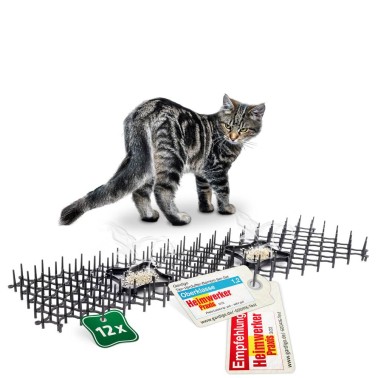
Fence Spikes for Cats are a physical barrier for specific areas where you want to prevent passage, access or resting by animals such as cats, small dogs, rabbits, martens or similarly sized animals.
They can be installed on walls, fences, planters, ledges, narrow passages or areas where the animal enters repeatedly. They are not a solution for large surfaces or large animals, but they can be very useful when the access point is well identified.
Tree guards
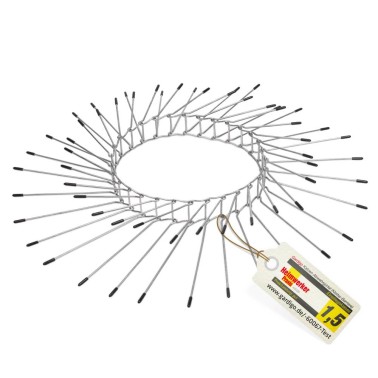
The Tree Guard to Stop Cats is designed to prevent cats from climbing up the trunk. It is a very specific and easy-to-understand solution: it protects the tree by acting directly on the climbing point.
It can help when cats climb garden trees, disturb other animals, reach raised areas or damage the trunk while climbing. As with any physical barrier, installation must be stable and adapted to the tree diameter.
Meshes and barriers for small animals
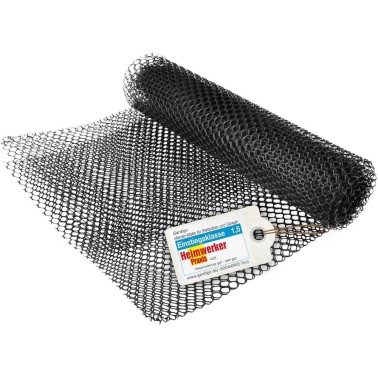
The Animal Repellent Mesh is a barrier solution for small animals such as martens, weasels or rodents, especially where you want to protect a car, garage or vulnerable access area.
This type of barrier works best when placed exactly where the animal tries to pass or enter. If the animal finds another open gap, it can go around it, so the surrounding area should be checked carefully.
Pond protection
Ponds with fish may need physical protection against cats or other predators. Floating covers, mesh or pond barriers can help reduce direct access to the water surface without closing the entire perimeter with a rigid structure.
For this page, no specific floating pond product is linked because the matching product in the Excel is not marked as active.
Fencing, mesh and closures
When the problem is continuous access or affects a wider area, the most reliable solution is usually a well-installed physical closure: fencing, mesh, grid or structural barrier adapted to the animal and the environment.
In these cases, the important point is not only to install a barrier, but to inspect the whole perimeter. If there is an open gap, a low unprotected area or a weak point, the animal may find an alternative route.
Advantages of physical barriers
Physical barriers have one clear advantage: they act constantly. They do not depend on batteries, sound, water, smell or the animal's acoustic reaction. If installed correctly, they protect the vulnerable point continuously.
- Constant protection: once installed, they keep working while the barrier remains in good condition.
- No poisons or chemicals: they protect by blocking, restricting passage or creating physical discomfort.
- No noise: they are suitable where you do not want to use sound or ultrasound.
- No water or electricity required: they can work without a plug, battery or hose.
- Useful in specific points: trees, walls, passages, vehicles, ponds, planters or vulnerable areas.
- Can be combined with other methods: in persistent cases, they can be reinforced with repellents, ultrasound, light or water.
Limitations of physical barriers
Physical barriers can be very effective, but only if they are chosen and installed correctly. They are not a universal solution for every animal or every surface.
- They work best in localised points: they are ideal when you know where the animal enters or what area you want to protect.
- They do not cover large areas unless they are fencing systems: large plots need structural closures or a combination of methods.
- They require correct installation: a poorly fixed barrier can move, leave gaps or lose effectiveness.
- The animal may go around them: if another access remains open, it may choose an alternative route.
- Not all are suitable for large animals: spikes, meshes or small guards do not replace proper fencing for bigger animals.
- They must be installed without creating risks: avoid unstable parts, loose pieces or poorly oriented edges.
How to install a physical barrier correctly
Before installing a physical barrier, observe the animal's behaviour. The key is to detect the exact point where it enters, climbs, digs, passes through or causes damage.
- Identify the vulnerable point: check tracks, damage, passage areas, marks, gaps or climbing points.
- Place the barrier where the animal acts: protecting one area does not help if the animal enters elsewhere.
- Check alternative access points: if a nearby gap remains open, the animal can go around the barrier.
- Fix the product securely: the barrier must remain stable and adapted to the surface.
- Check for risks: avoid unstable installations or edges that could cause accidents.
- Inspect the barrier periodically: rain, wind, ground movement or handling can affect the installation.
- Combine if needed: if the animal persists, repellents, ultrasound, water or light may help depending on the case.
Comparison with other animal repeller types
Physical barriers are a useful option, but they are not always the only solution. Depending on the animal, environment and problem, it may be better to combine them with other methods.
| Repeller type |
Best fit |
| Physical barriers |
When you want to block, limit or make access difficult at a specific point: trees, walls, passages, vehicles, ponds or vulnerable areas. |
| Ultrasound |
Indoor areas, defined gardens, PIR sensors, vehicles or spaces where high-frequency acoustic deterrence is useful. |
| Water |
Gardens, vegetable plots, terraces, lawns and specific outdoor areas with a water supply. |
| Light |
Nocturnal animals, rural areas, pens, chicken coops or points where simulated presence can help. |
| Sound |
Larger surfaces, farms, crops or open spaces where more coverage is required. |
| Repellents |
Plants, shoots, trees, specific areas or cases where smell or taste deterrence is preferred. |
Frequently asked questions about physical barriers for animals
What is a physical barrier for animals?
It is a solution that blocks, limits or makes access to a specific area uncomfortable for the animal. Unlike sound, ultrasound, light or water deterrents, it does not depend on a stimulus, but on physical protection installed at the vulnerable point.
When should I use a physical barrier?
Use one when the problem is localised: a tree, wall, passage, gap, vehicle, pond or specific garden area. If the problem affects a very wide surface, it may need structural fencing or a combination of methods.
Do physical barriers work for cats?
Yes. They can help prevent cats from passing through certain areas, climbing trees, accessing planters or entering specific garden points. Choose the barrier according to the access you want to block.
How can I stop cats from climbing trees?
Use a trunk guard designed specifically to prevent climbing. It must be installed securely and adapted to the diameter of the tree.
Can they help with martens, weasels or rodents?
Yes, as long as you act on the access point. Meshes, grids or specific barriers can make entry harder in garages, vehicles or vulnerable gaps.
Can I combine physical barriers with other deterrents?
Yes. In many cases it is recommended. A physical barrier can be combined with repellents, ultrasound, light or water to reinforce protection, especially if the animal insists or looks for alternative routes.
Physical barriers for animals at BirdGard Iberia
At BirdGard Iberia you will find physical barriers for protecting specific points against cats, martens, weasels, rodents and small animals: spikes, tree guards and repellent mesh. If you are not sure which solution fits your case, contact us and we will advise you free of charge.

 1 review