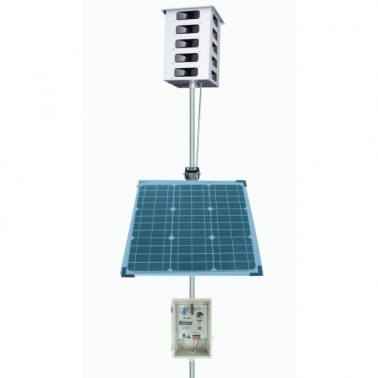
Starlings and thrushes can become a serious problem in crops, fig trees, vineyards, orchards, warehouses, agricultural facilities, power lines and roosting areas. They often move in groups or flocks, create noise, dirty surfaces with droppings and may cause significant damage when they find food or a comfortable place to return to every day.
To repel starlings and thrushes effectively, the main solution is usually a sound bird repeller configured with suitable sounds for these birds and reinforced with a moving visual deterrent. This page explains which equipment to choose, how to reduce habituation and what to check before installation. To compare other species, return to Bird Species.
Which solution to choose for starlings and thrushes
Differences between thrushes, starlings and blackbirds
Many enquiries mix the terms thrushes, starlings and blackbirds. They are similar-sized birds and may appear in gardens, fruit trees, crops or urban areas, but they do not always behave in the same way.
- Starlings: often form large flocks, may gather in roosts and create considerable noise and dirt.
- Thrushes: are frequently associated with crops, fruit trees, vineyards and areas with available food.
- Blackbirds: usually appear more often in gardens, green areas and vegetation, although they may be confused with thrushes.
This page focuses on thrushes and starlings, especially when the problem affects crops, fruit trees, warehouses, facilities or flocks.
Bioacoustic systems for starlings and thrushes
Bioacoustic repellers are the main solution when the problem is persistent. They emit alarm, predator and danger sounds that birds associate with an unsafe area.
Speakers should point towards the areas where birds enter, feed, rest or gather. If they are too far from the pressure point, effectiveness may decrease. To compare options, see Sonic Bird Repellers.
Moving hawk deterrent as visual reinforcement
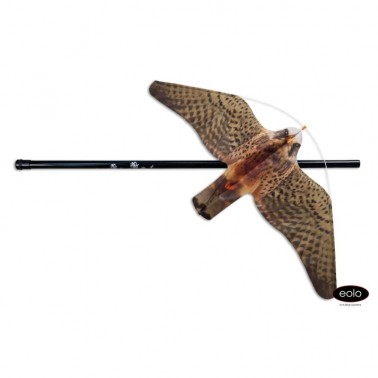
The Hawk ScareCrow - Eolo is the visual reinforcement recommended for starlings and thrushes in crops, fruit trees, vegetable gardens, roofs and open areas.
It is not a replacement for sound in persistent problems, but a complement. When sound deterrence is combined with a moving hawk silhouette, birds hear alarm or predator sounds and also see a visible threat in the area.
You can also compare options in Visual Bird Repellers.
MultiSound BS-20L as a multi-species acoustic alternative
The Bird Sound Repeller MultiSound BS-20L - Pigeons and Seagulls (Multi-Bird & Seagull Special Versions) can be useful when the issue involves several bird species in the same area.
For specific, persistent starling or thrush problems in crops, fruit trees or recurring flocks, we normally prioritise bioacoustic systems sized to the protected surface.
Starlings in fig trees, fruit trees and crops
Fig trees, orchards and crops are common scenarios for starlings and thrushes. Birds come because they find easy food and, if action is delayed, they may return repeatedly during the season.
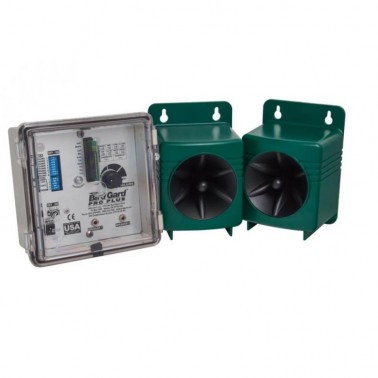
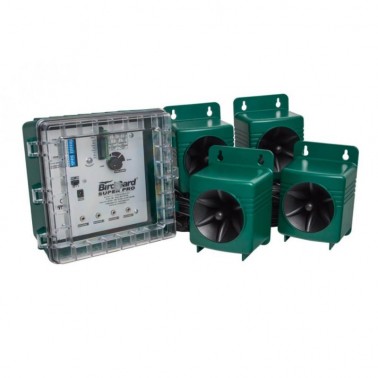
For small surfaces, Bird Gard Pro may be enough. If there are several trees, different entry lines or a wider estate, Bird Gard Pro Plus or Bird Gard Super Pro may fit better.
In crops, moving visual reinforcement can strengthen the installation, especially when placed in a visible area with good wind movement.
Starlings in warehouses, facilities and roosts
Starlings can form roosts or concentrate on elevated structures, roofs, warehouses, power lines or industrial areas. The issue is not only direct damage, but also noise, droppings and accumulated dirt.
Identify entry and exit times, concentration points and areas where birds feel safe. Then aim speakers at those points and maintain sound pressure during the first weeks.
For large facilities, consider Bird Gard Pro Plus, Bird Gard Super Pro or Bird Gard Super Pro Amp - Mega Blaster Pro, depending on the real area to protect.
What to do before installing a repeller
- Identify the dominant species: starlings, thrushes, blackbirds or mixed birds.
- Observe schedules: when birds arrive, leave and cause most damage.
- Locate entry points: trees, flight lines, roofs, posts, warehouses or feeding zones.
- Check perching or roosting areas: especially where droppings accumulate.
- Clean when possible: remove droppings, feathers or accumulated material.
- Aim equipment at the problem: speakers should point towards real activity zones.
- Reinforce with visuals: movement can improve results in open areas.
How to reduce habituation
Thrushes and starlings may get used to a stimulus if it is always the same, badly placed or not acting on the area they use. Combine stimuli and review the installation if birds keep returning.
- Aim speakers correctly towards entry, feeding, perching or roosting areas.
- Do not install equipment too far away from the zone where birds feel comfortable.
- Combine sound and visuals to reinforce the danger signal.
- Act early because preventing routine is easier than moving an established flock.
- Adjust the strategy if birds change position.
What to avoid with thrushes and starlings
- Do not use poison: it is dangerous, non-selective and may affect other birds, wildlife, pets and people.
- Do not rely only on a fixed scarecrow: birds can get used to it quickly.
- Do not use small devices for large flocks: coverage must match the surface.
- Do not install sound far from the pressure area: it must act where birds feed, perch or sleep.
- Do not expect immediate results in established roosts: deterrent pressure may need several weeks.
Related guides about thrushes and starlings
Frequently asked questions about thrushes and starlings
What is the best repeller for thrushes and starlings?
For persistent problems, use a sound repeller sized to the surface and combine it with moving visual reinforcement. The model depends on the size of the crop, estate, warehouse or affected area.
Do bioacoustic repellers work against starlings?
Yes. They emit alarm, predator and danger sounds that help move starlings and thrushes away from feeding, perching and roosting areas.
Which bioacoustic system do I need?
A compact system may suit a localised area. Two-speaker systems help when sound must be aimed at different points, while high-coverage systems suit larger crops or facilities.
How do I repel starlings from a fig tree?
Aim sound towards the fig tree or entry zone and reinforce it with a moving visual deterrent. It is better to act before the flock includes the tree in its daily routine.
How do I scare thrushes from vineyards or fruit trees?
Use bioacoustic equipment sized to the surface and reinforce with visual elements in visible areas. Adjust the strategy if birds change position.
What is the difference between thrushes, starlings and blackbirds?
Starlings often form large flocks and roosts. Thrushes are frequently linked to crops, fruit trees and vineyards. Blackbirds appear more often in gardens and green areas.
Does moving visual reinforcement help?
Yes, especially in crops, gardens, orchards and open areas. Persistent problems should combine it with sound to improve effectiveness and reduce habituation.
What should I do if starlings gather in a warehouse or facility?
Identify entry, perching and roosting points, then aim speakers at those areas and maintain consistent sound pressure during the first weeks. Large surfaces may need several speakers.
Is poison recommended against thrushes or starlings?
No. Poison is dangerous, non-selective and may affect other birds, wildlife, pets and people. Use non-harmful deterrence sized to the problem.
Does a multi-species acoustic device help?
Yes, when several bird species are mixed in the same area. For specific, persistent starling or thrush problems, a species-focused sound strategy is normally preferred.
Solutions for repelling thrushes and starlings at BirdGard Iberia
At BirdGard Iberia you will find non-harmful solutions for starlings and thrushes in fig trees, orchards, vineyards, crops, warehouses, facilities and roosting areas: bioacoustic systems, moving visual reinforcement and multi-species acoustic alternatives. If you are unsure which solution fits your case, contact us and we will advise you free of charge.

 63 reviews