
Laser Bird Deterrents
 1 review
Laser for Pigeons and Birds: Avix HandHeld, Avix Autonomic and Laser Bird Deterrents
Laser for pigeons and birds is a silent bird control technology based on a visible beam of light, usually green. Birds may perceive the movement of the laser as a physical threat approaching them, causing them to leave the area without the need for sounds, chemicals or direct contact.
Laser bird deterrents are especially interesting in environments where noise is not an option: industrial buildings, warehouses, roofs, industrial facilities, farms, logistics areas, ports, crops or spaces where birds need to be moved away without generating acoustic disturbance.
The manufacturer currently calls Avix HandHeld the model that appears in our store as Agrilaser Handheld, and Avix Autonomic the model published as Agrilaser Autonomic. We keep the product page names, but include both names so that you can correctly identify each device.
In this category you will find manual lasers, automatic lasers and safety accessories. If you are not sure whether laser is the right technology for your case, you can also visit our guide by type of bird repeller.
How a Laser Bird Deterrent Works
A laser bird deterrent uses a green light beam that many birds interpret as a moving threat. When they see the light point moving across the surface, they react instinctively and tend to move to another area.
One of its main advantages is that it works silently. This is why it can be an interesting option in places where sonic bird repellers are not viable due to the presence of neighbours, workers, animals sensitive to noise or acoustic restrictions.
There is one key factor to consider: the laser works best when the beam is visible. For this reason, it is usually more effective in low-light conditions, at sunrise, at sunset, on cloudy days, indoors or in areas with controlled lighting.
Green Laser to Repel Birds
Green lasers are often used in bird control because the beam is visible to many species and can be interpreted as an approaching threat. This visual response can help move away pigeons, seagulls, starlings, thrushes, sparrows, cormorants and other birds, depending on the environment and the level of habituation.
In full sun or in very bright conditions, the laser may lose contrast and become less visible. That is why, before choosing this technology, it is important to assess the time of day when the birds appear, the light conditions, the size of the area and whether manual or automatic use is needed.
| Condition | Impact on the laser | Recommendation |
|---|---|---|
| Sunrise, sunset or cloudy days | The beam is usually more visible and may generate a clearer response. | These are especially suitable times to use laser technology. |
| Indoors, industrial buildings or warehouses | Visibility can be good if the lighting is controlled. | Consider a manual or automatic laser depending on the size of the area. |
| Full sun or intense light | The beam may be less visible to birds. | Consider alternative time slots or combine it with other methods. |
| Well-established birds | They may require more deterrent pressure or a combined strategy. | Combine with cleaning, access blocking, sound, visual deterrents or anti-perching. |
Laser for Pigeons: When It Can Be a Good Option
Laser for pigeons can be useful in industrial buildings, warehouses, roofs, patios, buildings, industrial facilities or areas where a silent solution is needed to move birds away without using sound.
It is especially interesting when pigeons are visible and can be acted upon manually or automatically. Indoors or in low-light areas, the laser may be more visible and generate a clearer response.
If pigeons always perch on the same point, such as ledges, antennas, railings, roofs or solar panels, the laser can help move them away, but it may be necessary to combine it with anti-perching systems to prevent them from landing again in the same area. You can also visit our dedicated section on how to repel pigeons.
Types of Laser Bird Deterrents
There are mainly two types of laser for birds: manual and automatic. The choice depends on the size of the area, how frequent the problem is, the light conditions and whether a person will be available to direct the beam.
| Type of laser | How it works | When to choose it |
|---|---|---|
| Manual laser: Avix HandHeld / Agrilaser Handheld | An operator directs the beam towards the areas where birds are present or perching. | Occasional interventions, control patrols, indoors, outdoors or areas where targeted action is needed. |
| Automatic laser: Avix Autonomic / Agrilaser Autonomic | The device projects the beam following routes or patterns without constant intervention. | Facilities where an autonomous and repetitive solution is needed over a specific or large area. |
| Laser for indoor use | Used in industrial buildings, warehouses, factories or enclosed spaces where birds have entered and perch on structures. | When the problem is inside a building and a silent solution is required. |
| Laser for outdoor use | Acts on roofs, fields, industrial areas, crops or open facilities. | When birds gather outdoors and the light conditions allow good beam visibility. |
| Safety accessories | Help use laser technology with greater protection and responsibility. | Especially recommended when working frequently with laser equipment. |
Comparison of Laser Bird Deterrents
The range of laser devices for birds includes manual solutions, automatic solutions and protective accessories. This table summarises when each product may be suitable.
| Product | Operation | Range / coverage | Where it usually fits |
|---|---|---|---|
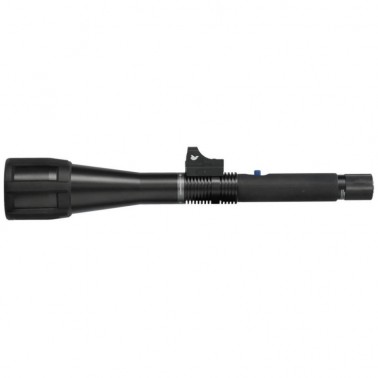
| Avix HandHeld / Agrilaser Handheld | Manual, operated by a person. | Up to 2,500 m. | Farms, industrial buildings, crops, roofs and facilities where targeted action is needed. |
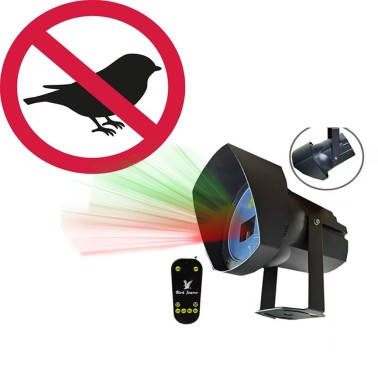
| Bird Laser Repeller | Automatic. | Approximate coverage of 500 m², indoors and outdoors. | Warehouses, industrial buildings, patios and medium-sized surfaces where repeated coverage is needed. |
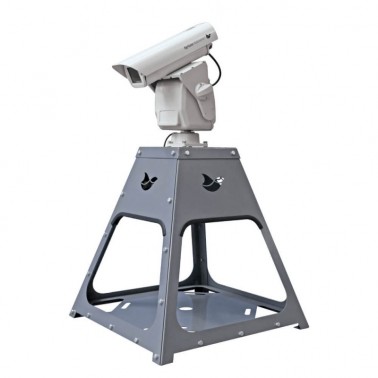
| Avix Autonomic / Agrilaser Autonomic | Fully automatic. | Outdoor areas and large surfaces. | Farms, industry, landfills, roofs or professional environments. |
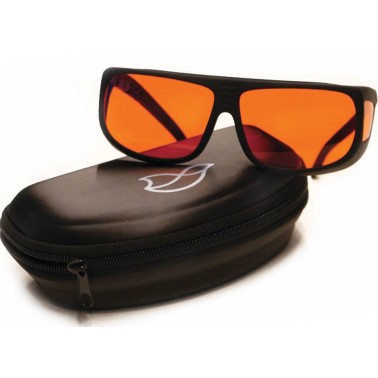
| Laser Safety Glasses | Safety accessory. | Eye protection. | Users handling laser devices, especially in frequent or professional use. |
On each product page you will find technical specifications, videos, usage information and reviews from other customers to compare in detail.
Avix HandHeld: Manual Laser to Repel Birds
The Avix HandHeld, published in our store as Agrilaser Handheld, is a manual laser that allows the beam of light to be directed towards the exact area where the birds are located. It is especially useful when an operator can intervene at specific times, for example in an industrial building, on a roof, in a crop area, in an industrial facility or in a logistics area.
This type of manual laser is designed to act in a targeted way on visible birds. It can be used both indoors and outdoors, always following the safety instructions and avoiding pointing at people, vehicles, aircraft, domestic animals or eyes.
It may be interesting when a continuously operating device is not needed, but rather an intervention tool for specific times of the day.
Avix Autonomic: Automatic Laser for Birds
The Avix Autonomic, published in our store as Agrilaser Autonomic, is designed to work autonomously over a specific area. Unlike a manual laser, it does not depend on a person directing the beam at every moment, but performs movement routes or patterns to create visual pressure on birds.
The Avix Autonomic is an automatic solution designed for outdoor areas and large surfaces, suitable for facilities where an autonomous response is needed against recurring birds.
The Bird Laser Repeller can also be considered, an automatic model with an approximate coverage of 500 m², suitable for indoor and outdoor use. It may fit industrial buildings, warehouses, patios or delimited areas where deterrence needs to be reinforced without using sound.
Where Laser Bird Deterrents Are Used
Thanks to their range and silent operation, lasers can be especially suitable for large surfaces and sound-sensitive environments.
- Farms, vineyards and fruit trees: against starlings and thrushes or other crop birds.
- Industrial buildings, warehouses and logistics: where pigeons, sparrows or other birds may enter.
- Ports, roofs and coastal areas: with the presence of seagulls or other coastal birds.
- Ponds, fish farms and water areas: against cormorants, herons or other water-related birds.
- Roofs and industrial facilities: when a silent solution is needed in areas where sound may be problematic.
Laser Classes: What Class 2 and Class 3B Mean
Laser products are classified according to their power, wavelength and level of eye risk. The laser class must be indicated on the device label and in its manual. Before using any laser, it is important to check the class of the model and apply the corresponding safety measures.
- Class 2: usually refers to visible low-power lasers. Although the risk is lower in brief and accidental exposures, the beam should not be looked at directly or used irresponsibly.
- Class 3B: direct viewing of the beam can be dangerous and requires stricter safety measures, such as suitable protective glasses, control of the environment and responsible handling. This type of equipment is usually reserved for professional use.
Both the Avix HandHeld / Agrilaser Handheld and the Avix Autonomic / Agrilaser Autonomic are professional Class 3B devices. Before purchasing, check the product page, manual and protection measures required for each model.
Regulations and Safe Use of Lasers
A laser is a powerful tool and must always be used responsibly. In addition to following the manufacturer’s instructions, you should check the regulations in force in your area and for your activity. Depending on the country and environment of use, regulations related to protection against artificial optical radiation in the workplace or other specific provisions may apply. This information is for guidance only and does not constitute legal advice.
Basic recommendations for responsible use:
- Never direct the beam towards the eyes of people or domestic animals.
- Do not point at vehicles, roads or aircraft: it can be dangerous and may be punishable by law.
- Use laser safety glasses suitable for the class of the equipment when appropriate.
- Avoid dangerous reflections: pay attention to glass, metal surfaces, water or other reflective elements.
- In areas near airports or regulated spaces, consult the competent authority before installing or using laser equipment.
- Always follow the manufacturer’s instructions: each model has its own installation, orientation, distance and usage instructions.
How to Increase Laser Effectiveness
The effectiveness of a laser depends both on the equipment and on how it is used. To improve results, it is important to consider light conditions, bird behaviour and prior preparation of the area.
- Take advantage of low-light hours: sunrise, sunset and cloudy days are usually the most effective times.
- Move the beam slowly: a slow sweep over perching areas can be perceived as more threatening than a sudden movement.
- Vary the patterns: alternating routes helps reduce the risk of habituation.
- Clean the area before installation: removing droppings, feathers, nesting remains and food helps reduce the birds’ attachment to the place.
- Combine it with other measures: adding sound, visual stimuli, anti-perching or access blocking can reinforce deterrence in established problems.
Laser vs Sound, Visual Deterrents and Anti-Perching
Laser does not always replace other technologies. Each method has a different role in bird control.
| Technology | When it fits best | Limitations |
|---|---|---|
| Laser | Areas where a silent, targeted or automatic solution is needed, especially with good beam visibility. | It depends heavily on light conditions and requires safe and responsible use. |
| Sound | Large surfaces, crops, industrial buildings, roofs or facilities where acoustic pressure is needed over the area. | It may generate acoustic disturbance if there are neighbours or people nearby. |
| Visual deterrents | Gardens, crops, roofs or outdoor areas where a visual threat needs to be added. | Birds can become accustomed if the stimulus is static or always the same. |
| Anti-perching | Specific points where birds land: ledges, railings, antennas, roofs or solar panels. | It does not cover large surfaces on its own. |
Frequently Asked Questions about Laser Bird Deterrents
What is a laser bird deterrent?
It is a system that uses a visible beam of light, usually green, to generate a visual signal that birds perceive as a threat and cause them to leave the area.
Does laser work to repel birds?
It can work very well in certain environments, especially in low-light conditions, indoors, at sunrise, at sunset or on cloudy days. Its effectiveness depends on the species, the light, the environment and the level of habituation of the birds.
Does laser work to repel pigeons?
Yes, it can help move pigeons away in industrial buildings, roofs, patios, warehouses or areas where a silent solution is needed. If pigeons always perch on a specific point, it may be necessary to combine it with anti-perching systems.
Can a laser pointer be used to repel pigeons?
We do not recommend using any domestic laser pointer to repel pigeons. For bird control, it is advisable to use equipment specifically designed for this purpose and always follow the safety instructions, avoiding pointing at people, eyes, vehicles, aircraft or reflective surfaces.
What is the difference between Avix HandHeld and Agrilaser Handheld?
Avix HandHeld is the current name used by the manufacturer for the manual model that still appears in our store as Agrilaser Handheld. It is a professional manual laser operated by a person.
What is the difference between Avix Autonomic and Agrilaser Autonomic?
Avix Autonomic is the current name used by the manufacturer for the automatic model that still appears in our store as Agrilaser Autonomic. It is an automatic solution designed for outdoor areas and large surfaces.
What is the difference between a manual laser and an automatic laser?
A manual laser requires a person to direct the beam towards the area where the birds are. An automatic laser performs routes or patterns autonomously over a specific area.
Can laser be used indoors?
Yes. It can be useful in industrial buildings, warehouses, factories or enclosed spaces where birds have entered and perch on indoor structures. In these cases, beam visibility is usually better than outdoors in bright light.
Does laser work in full sun?
With strong ambient light, the beam may be less visible and lose effectiveness. That is why it usually works better in low-light conditions, at sunrise, at sunset, on cloudy days or indoors.
What is the difference between a Class 2 and a Class 3B laser?
Class 2 usually refers to visible low-power lasers, although the beam should not be looked at directly. Class 3B involves greater eye risk and requires stricter protective measures, such as suitable protective glasses and responsible handling.
Is it safe to use a laser to repel birds?
It must always be used following the manufacturer’s instructions and with common sense. It must not be pointed at people, eyes, vehicles, aircraft or reflective surfaces that may generate dangerous reflections.
Can I combine laser with other bird deterrents?
Yes. In established problems, it may be advisable to combine laser with sonic bird repellers, visual deterrents, anti-perching, prior cleaning or access blocking.
Not Sure Which Laser to Choose?
If you are unsure between a manual or automatic model, laser classes, or between laser and another technology, visit our guide by type of bird repeller or contact our team and we will advise you according to your case.