Bats can become a nuisance when they take shelter in a roof, attic, wall cavity or behind a shutter. But before taking action, it is important to understand something first: in Europe, bats are protected by wildlife conservation legislation. This does not mean that nothing can be done, but it must be done correctly: through prevention, deterrence and, if a colony is already present, through exclusion at the right time and with any necessary authorisations.
On this page, we explain how to deter bats legally and respectfully, when action can be taken, what should not be done, and which deterrent solutions may help in preventive situations or as support within an authorised intervention.
Bats are a protected species
In Europe, bats are protected by wildlife conservation legislation. In general, they must not be killed, harmed, captured or intentionally disturbed, and their roosts, breeding sites or resting places may also be protected.
This does not mean that you cannot do anything if you have bats in a roof, attic, shutter box or wall cavity. It means that any action must be carried out correctly: preventing entry before they become established, avoiding sealing gaps with bats inside and, if a colony is already present, using non-harmful exclusion at the appropriate time and with any authorisation required by the competent authority.
For this reason, the aim should not be to eliminate bats, but to prevent, deter and exclude them responsibly. It is also worth remembering that bats are valuable allies: they consume many insects, including mosquitoes, and play an important ecological role.
This information is for guidance only and does not constitute legal advice. Regulations and procedures may vary depending on the country, region and species, and may also change over time. Before taking action on a bat colony or roost, always consult the competent environmental authority in your area.
The timing factor: when action can and cannot be taken
Timing is essential. During the breeding period, females form colonies and young bats are born unable to fly. Acting at this time could leave young bats trapped or harm the colony, so it should not be done. This period generally falls between spring and summer, although it may vary depending on the species, area and weather conditions.
There is also the winter period, when many species may hibernate and should not be disturbed or excluded. In practice, any exclusion work should be planned within a limited window, usually in late summer or early autumn, once the young can fly and before hibernation begins.
Trying to “drive them out” in spring or summer is usually the worst possible moment. That is why, when dealing with a colony, the first decision is not how to act, but when and under what authorisation.
How to act correctly and legally
If bats are already installed, the key is to exclude them without harming them, and never to trap them inside. An entry point should not be sealed if there is any risk of bats remaining inside. Improvised action on an active colony should also be avoided.
The correct method, outside the breeding and hibernation periods, is to use one-way exclusion devices that allow bats to leave but prevent them from returning. Only once it has been confirmed that no bats remain inside should the access points be sealed.
Acting on bats installed in a roost may require prior authorisation from the competent environmental authority. This includes removal, exclusion, sealing of access points or any method that may disturb the colony or affect its roost. For important colonies, the most sensible approach is to contact a company specialised in wildlife management or an organisation with expertise in bats.
A good coexistence practice is to offer them an alternative: installing a bat box nearby may help them relocate without losing their beneficial role in insect control. You can find options in our animal houses section.
Prevention and deterrent solutions
Within the law, deterrent devices have two very different uses that should not be confused:
Prevention, the recommended use. If there is no colony already established, an ultrasonic repeller may help prevent bats from settling in a specific space, such as a porch, attic, room, cavity or passage area. This is the simplest scenario and where these devices are most useful, because you act before a colony exists and before the protection of the roost becomes a factor.
In the case of bats, ultrasound makes more sense than with other species because bats use echolocation to orient themselves. An acoustically uncomfortable environment may make a space less attractive as a roost. Even so, it is important to be realistic: results may vary depending on the species, location and level of pressure; habituation may occur over time and no device offers absolute guarantees. It works best preventively and combined with the legal sealing of entry points when there are no bats inside.
Colony already installed: regulated intervention. If a colony already exists, you should not act on your own. Acting on bats installed in a roost may require prior authorisation from the competent environmental authority. This includes removal, exclusion, sealing of access points or any method that may disturb the colony or affect its roost.
Important: requesting and obtaining any necessary authorisation is the sole responsibility of the customer. BirdGard Iberia supplies deterrent devices, but does not manage permits and is not responsible for any use that does not have the required authorisation. Where authorisation is required, it must determine the method, dates and conditions of the intervention. An ultrasonic deterrent should only be used as support within an exclusion process if the competent authority allows it, never as a replacement for one-way exclusion or to force bats out in a way that could leave young or adult bats trapped inside.
This information is for guidance only and does not constitute legal advice. Regulations and procedures vary depending on the country and region, and may change. Before taking action, always consult the competent environmental authority in your area.
At BirdGard Iberia, we offer two ultrasonic devices suitable for preventive deterrence or as support within an authorised intervention:
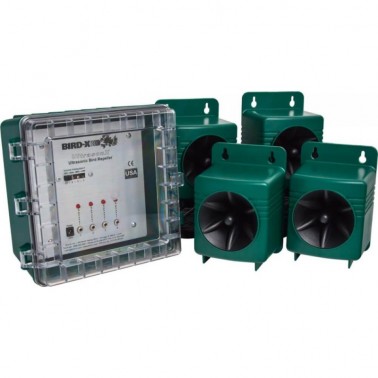
- UltraSon X: ultrasonic repeller designed for indoor areas, outdoor areas, semi-enclosed spaces or zones where deterrence is required exclusively through ultrasound. It has a coverage of up to 360 m² and can be installed outdoors.
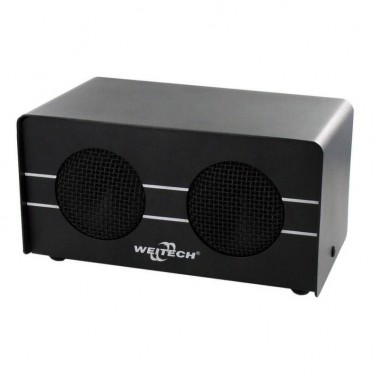
- WK0600: repeller using ultrasound and audible sounds, with coverage of up to 325 m². This device is not designed to work directly outdoors and must not get wet. If installed outside, it must always be protected from rain and direct moisture.
UltraSon X or WK0600 for bats?
The main difference is where you are going to place the device and the type of installation you need:
- WK0600: mainly designed for indoor and enclosed spaces, such as attics, lofts, sheds, garages or warehouses. It plugs into the mains and combines ultrasound with audible sounds, so its use should be assessed carefully if there are homes or neighbours nearby. It has coverage of up to 325 m². This device is not designed to work directly outdoors and must not get wet; if installed outside, it must always be protected from rain and direct moisture. It is a more domestic-oriented option for indoor spaces.
- UltraSon X: the more suitable option for outdoor areas, semi-covered spaces and passage areas, such as porches, eaves, access points, façades or places where there is no nearby mains connection. It can be installed outdoors, has coverage of up to 360 m² and works exclusively by ultrasound, making it more discreet. It can also be connected to the mains or to a battery, making it a more flexible and professional solution for outdoor or more demanding installations.
Both devices cover a similar surface area, so the choice depends mainly on whether the point to protect is indoors or outdoors, whether there is access to mains electricity and whether you want an exclusively ultrasonic solution or a combination of ultrasound and audible sounds.
In both cases, remember that the recommended use is preventive. If a colony is already installed, any action may require prior authorisation from the competent environmental authority. Obtaining that authorisation, where necessary, is the sole responsibility of the customer.
If you are not sure which device best suits your case, or how and when to act within the law, contact us.
Frequently asked questions about bats
Is it legal to deter bats?
Bats are protected in many European countries, so they must not be killed, harmed, captured or intentionally disturbed. It is possible to prevent them from settling and to seal access points once it has been confirmed that there are no bats inside. If a colony or roost already exists, any action may require prior authorisation from the competent environmental authority. Obtaining that authorisation, where necessary, is the sole responsibility of the customer.
Do ultrasonic devices work with bats?
Ultrasound has more basis with bats than with birds, because bats use echolocation. Even so, effectiveness may vary depending on the species, the roost and the level of pressure. For this reason, it is best used mainly preventively and, where appropriate, together with the legal sealing of entry points.
I have bats in the roof or inside the house. What should I do?
Do not act on your own and do not seal their exit with bats inside. The correct approach is to wait for the appropriate window, outside the breeding and hibernation periods, consult the competent environmental authority in your area and, for important colonies, use a company specialised in wildlife management.
When can action be taken?
In general, outside the breeding period and outside hibernation. The usual window is late summer or early autumn, when the young can already fly and before hibernation begins. Even so, dates may vary depending on the species, area and administrative authorisation.
Can I close the gaps where bats enter?
Yes, but only once it has been confirmed that no bats remain inside. Sealing an entry point with bats inside can harm them and make the problem worse. If a colony is already established, it is advisable to consult the competent authority or a specialised company first.
Are bats dangerous?
Bats are not aggressive animals and they play a beneficial role because they consume large quantities of insects. As with any wild animal, they should not be handled with bare hands. If a bat enters the house, the best option is to open the windows, switch off indoor lights if possible and allow it to leave on its own.
What product can I use to prevent bats from entering?
For prevention, you can consider ultrasonic devices such as UltraSon X or WK0600. They work best when there is not yet a colony installed and when combined with checking and sealing possible entry points, provided there are no bats inside.
Living with bats
Living with bats is possible and, in fact, beneficial. The key is to act sensibly: prevent before they settle, respect the timing and, if there is already a colony, act with authorisation and without harming them. If you want to offer them an alternative, a bat box can help them relocate without losing their natural role in insect control.
Discover more in our sections for ultrasonic animal repellers, animal houses and the rest of our animal species.

 28 reviews