
Ants
Ants at home usually appear by following a food trail. When a scout ant finds crumbs, sugar, accessible food or residues, it leaves a chemical trail that other ants follow. That is why you often do not see just one ant, but a full line entering through a crack, joint, window or gap under the door.
The key to controlling ants is not chasing each visible ant, but breaking the trail, removing food, sealing access points and creating a barrier at entry routes. At BirdGard Iberia we support a practical, non-lethal approach based on prevention and natural repellents, without promising miracle devices. For other household insect solutions, return to Pest Control - Insects.
What to do depending on the ant problem
| Situation | What it may mean | What to do |
|---|---|---|
| Ants in the kitchen | They have found food, crumbs, sugar, grease or accessible residues. | Clean the trail, remove food, store food in closed containers and find where they enter. |
| A line of ants always in the same place | They are following a pheromone trail. | Clean the route with soapy water or vinegar and apply a repellent barrier at transit points. |
| Small ants indoors | There may be a nearby entry point, a stable food source or a colony close by. | Follow the line to the entry point, seal cracks and reinforce with a natural repellent. |
| Ants near pet food | Food or residues are acting as an attractant. | Remove food when not in use, clean the floor and create a barrier in the transit area. |
| Ants in a warehouse, industrial unit or premises | There may be access routes, organic residues or repeated entry points. | Use hygiene, access sealing, storage checks and repellent on perimeters and critical points. |
| Winged ants inside the house | It may be a reproductive flight or indicate a nearby colony. | Check windows, cracks, false ceilings and entry points. If it repeats, professional help may be needed. |
| Persistent problem | There may be a nearby nest, unsealed entries or an external source. | Strengthen prevention, check access points and consider professional help if they return every day. |
Why ants appear at home
Ants enter mainly because they find food. They are attracted by food residues, sugar, honey, ripe fruit, crumbs, grease, pet food, rubbish and spilled liquids. Once they find the resource, they mark the path with pheromones so the rest of the colony can follow it.
This is why many ants can appear suddenly and always along the same route. It is not random: they are following an invisible chemical path. If you clean only the visible ants but do not remove that trail, they can easily return.
What attracts ants
To prevent ants, first identify what they are looking for. Although ants are often associated with sweet foods, they can also be attracted by fats, proteins and moisture.
- Sugar, honey and sweets: one of the most common sources in kitchens and pantries.
- Crumbs and food residues: especially on worktops, floors, tables and corners.
- Ripe fruit: it can attract ants and other insects.
- Pet food: if it remains on the floor for many hours.
- Organic waste: especially if the bin has no lid or is not cleaned often.
- Grease and cooking residues: some species also look for proteins or fats.
- Moisture: in bathrooms, kitchens, sinks, plant pots or areas with leaks.
- Cracks and easy access points: gaps under doors, joints, windows, skirting boards or pipes.
How to keep ants away
Ant control is based on prevention. More than eliminating the ants you see, the important thing is to stop them finding food, erase the trail they follow and block their entry points.
- Store food in closed containers: especially sugar, cereals, biscuits, honey, sweets and open food.
- Clean crumbs and residues: worktops, floors, tables, pantries and areas where children or pets eat.
- Do not leave dirty dishes: food residues attract ants during the night.
- Remove pet food: do not leave it accessible for hours if ants appear.
- Use bins with lids: and clean the inside frequently.
- Find the entry point: follow the line to the crack, joint or gap they use.
- Seal access points: cracks, skirting boards, joints, door frames, windows and pipe routes.
- Apply a repellent barrier: in transit areas and entry points, always following the product instructions.
How to break the pheromone trail
When ants form a line, they are following a pheromone trail. If you do not break that trail, they will keep arriving even if you remove some visible ants.
To interrupt the route, clean the area they pass through with soapy water or water and vinegar. This helps erase the chemical path. Then remove the food that attracted them and check the entry point.
Vinegar can be useful as support because it helps clean and confuse the trail, but it should not be treated as a complete solution on its own. It works best together with cleaning, access sealing and natural repellent.
Natural repellent as a barrier against ants
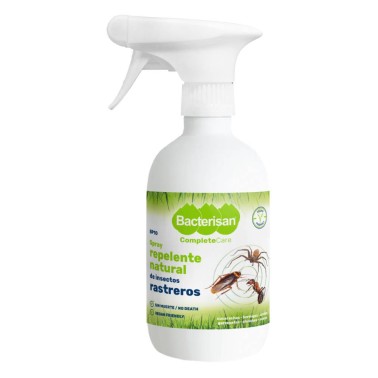
Natural Crawling Insect Repellent can be used to create an olfactory barrier in transit areas and entry points. It is useful when you want to keep ants away without relying on household insecticides.
It can be applied as support in cracks, skirting boards, door frames, windows, joints, kitchen access points, transit areas, indoor perimeters and points where activity has been seen. Do not apply it on food, utensils, food preparation surfaces or areas where direct contact may occur without cleaning.
Like any scent-based repellent, it should be reapplied periodically, especially after cleaning the area or when the scent fades. For safe use, always follow the product instructions and prevent direct access by children and pets to the treated area when required.
An honest note about ultrasound for ants
Ultrasonic devices are not the right solution for ants. Ants navigate mainly through chemical trails, pheromones, food and access points, not through sound like other animals. For that reason, we do not recommend ultrasonic devices for ant problems.
In this case, what really helps is much simpler: clean the trail, remove food, seal entries and use a natural repellent as a barrier in the right points.
Ants in warehouses, industrial units and premises
In warehouses, industrial units, premises, professional kitchens or facilities with stored products, ants look for the same things as in a home: food, access routes and shelter. The difference is that the problem can appear on a larger scale and be harder to locate.
Check storage areas, packaging, food, rubbish, moisture points, doors, loading bays, cracks and pipe routes. The strategy should combine hygiene, order, access sealing and repellent barriers at critical points.
If presence is high, persistent or affects a food business, it is advisable to consider a professional pest control company.
Winged ants: what they mean
Winged ants usually appear at certain times of year during reproductive flights. Seeing one occasionally may be due to entry from outside, but if many appear indoors or the situation repeats, check possible nesting or entry points.
Pay attention to windows, shutters, cracks, false ceilings, walls, damp areas and gaps near doors or pipes. If they appear repeatedly indoors, professional help may be useful to locate the origin.
What not to do if you have ants
Some mistakes make ants return again and again. Avoid them from the start:
- Do not clean only visible ants: the pheromone trail must also be erased.
- Do not leave food exposed: sweets, crumbs, ripe fruit and pet food can attract them.
- Do not expect results from ultrasound: it is not the right solution for ants.
- Do not apply products on food or preparation surfaces: any repellent must be used in suitable areas.
- Do not seal one entry without checking others: ants may find alternative routes.
- Do not ignore the source: if they return every day, food, moisture or access is probably still available.
- Do not wait too long in food premises: the sooner you act, the easier control becomes.
When to ask for professional help
In many domestic cases, ants can be controlled with cleaning, sealing and natural repellent. However, ask for help if they appear every day, come out of walls, false ceilings or installations, if you cannot find the entry point, if there are several active routes or if the problem affects a food business.
Professional advice may also be useful if winged ants appear repeatedly indoors or if you suspect the nest is inside the building structure.
Frequently asked questions about ants
How can I get rid of ants at home naturally?
Rather than trying to eliminate an entire colony, the most effective step is to cut their access to food: clean the trail with soapy water or vinegar, store food in closed containers, seal cracks and place a natural repellent as a barrier at entry points.
Why do ants appear in the kitchen?
Because they find food, sugar, crumbs, grease, rubbish or moisture. When a scout ant finds food, it leaves a pheromone trail that other ants follow, creating a line.
What attracts ants?
They are attracted by sugar, honey, sweets, crumbs, ripe fruit, pet food, rubbish, grease, moisture and food residues. They also use cracks and gaps to enter.
Does vinegar work against ants?
Yes, as support. Vinegar helps clean and erase the pheromone trail ants follow, but it does not remove the source of the problem if accessible food or open entry points remain.
How do I break an ant trail?
Clean the full route with soapy water or water and vinegar. Then remove the food that attracted them, dry the area and seal the entry point if you find it.
Where should ant repellent be applied?
Apply repellent in transit and entry areas such as cracks, skirting boards, door frames, windows, joints, perimeters or points where activity is visible. Do not apply it on food or surfaces where food is prepared.
Do ultrasonic devices work against ants?
We do not recommend them for ants. Ants navigate by pheromones, food and access routes, not sound. Prevention, trail cleaning and scent-based repellents work better in this case.
What do winged ants mean?
Winged ants usually appear during reproductive flights. If they appear occasionally, they may come from outside, but if they emerge indoors repeatedly, check cracks, windows, false ceilings and possible nesting areas.
How can I prevent ants from coming back?
Keep the kitchen free from residues, store food in closed containers, clean trails, seal cracks and renew the natural repellent at entry points when needed.
When should I call a professional?
Ask for help if ants appear every day, come out of walls or installations, you cannot locate the entry point, winged ants recur or the problem affects a food business.
Ant solutions at BirdGard Iberia
At BirdGard Iberia we support honest, non-lethal ant control: prevention, trail cleaning, access sealing and Natural Crawling Insect Repellent as a barrier in transit areas. You can also check our pest control solutions for insects. If you are unsure about your case, contact us and we will advise you free of charge.