
Bird Traps
Bird Traps and Pigeon Trap Cages
Bird traps and pigeon trap cages are used to capture live birds in situations where other control methods are not enough. They are especially useful when pigeons, magpies, crows or other birds remain in an area because they find food, shelter, perching points or nesting places.
At BirdGard Iberia, we offer pigeon traps, bird traps and capture cages designed to work without poisons, chemicals or electricity. They are resistant solutions, made with galvanised materials and designed for controlled bird capture in agricultural buildings, livestock facilities, gardens, farms, warehouses, roofs or areas where birds have developed a strong attachment.
Traps do not always replace other types of bird repellers. In many cases, they work better as part of a combined strategy: first, the bird presence is reduced through controlled capture and then the area is reinforced with sonic bird repellers, visual bird deterrents, anti-perching systems, cleaning or access blocking.
When to Use a Bird Trap Cage
Bird trap cages are usually recommended when the bird population is high or when some individuals have become used to staying in the area even after other measures have been installed.
This often happens in cases of pigeons in industrial buildings, warehouses, livestock facilities, gardens, patios, roofs or buildings where they find food and shelter. If these individuals remain in the area, they can create a calling effect on the rest and make it easier for new birds to occupy the space again.
| Situation | Why a trap may fit | Solution you can consider |
|---|---|---|
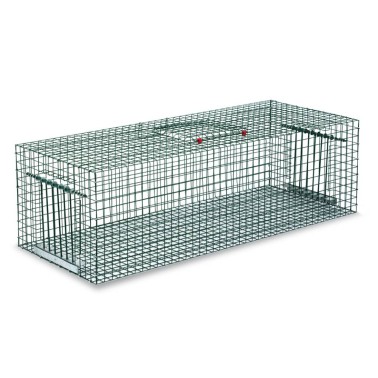
| Pigeons established in a building or facility | Some individuals may resist leaving the area even after bird repellers have been installed. | Pigeon Trap Cage. |
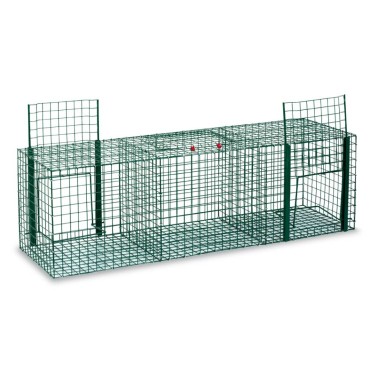
| Presence of pigeons, magpies or crows | When several species use the same area as a feeding or resting point, it may be necessary to capture several individuals. | Trap Cage for Pigeons, Magpies, Crows - 3 compartments. |
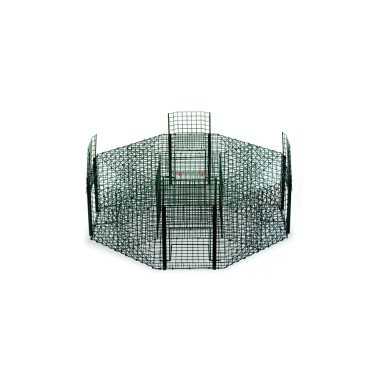
| High bird pressure outdoors | If the population is large or recurring, a higher-capacity cage may be useful. | Trap Cage for Magpies, Pigeons, Crows - Octagonal. |
| Birds that always return to the same point | When there is attachment due to food, shelter, nests or signs of presence, capture can help reduce the initial problem. | Trap combined with prior cleaning and prevention measures. |
| Persistent problems after installing bird repellers | Sometimes, the most habituated individuals remain in the area and may attract the rest again. | Capture of resistant individuals and later reinforcement with sound, visual deterrents or anti-perching. |
Types of Bird and Pigeon Traps
The choice of trap depends on the species, the number of birds, the available space and whether you need to capture one or several individuals at the same time.
| Model | Capacity | Species | Where it usually fits |
|---|---|---|---|
| Octagonal Trap Cage | 5 compartments. Higher capacity. | Magpies, pigeons and crows. | Farms, livestock facilities or areas with high populations and frequent captures. |
| 3-Compartment Trap Cage | 3 compartments. Medium capacity. | Pigeons, magpies and crows. | Industrial buildings, gardens, farms or facilities with several species present. |
| Rectangular Pigeon Trap Cage | 1 compartment. | Pigeons. | Specific points or problems mainly focused on pigeons. |
On each product page you will find dimensions, photos, technical information, reviews from other customers and the option to buy online.
Why Choose Our Bird Traps
- Live capture: they allow birds to be captured without using poisons, toxic substances, chemicals or electricity.
- Professional and resistant design: made with galvanised materials and designed for outdoor use, farms, industrial buildings or professional facilities.
- Models according to capacity: we offer pigeon cages, multi-compartment models and higher-capacity traps for frequent captures.
- Complement to other solutions: they can be combined with sonic bird repellers, visual bird deterrents, anti-perching systems or access blocking.
- No electricity required: they do not need an electrical connection or batteries to work.
Pigeon Traps
Pigeon traps can be useful when pigeons are very used to an area and do not leave easily. This is common in industrial buildings, livestock facilities, warehouses, patios, roofs, gardens or areas where they have access to food and shelter.
Pigeons are very persistent birds. In many cases, systems to repel pigeons help reduce the general presence, but some individuals may remain in the area. If these individuals stay, they can create a calling effect and make it easier for other pigeons to occupy the space again.
In this type of situation, a pigeon trap cage can help remove these resistant individuals and then reinforce the area with sound, visual deterrents, cleaning, access blocking or anti-perching solutions.
Traps for Magpies and Crows
Magpie traps and crow traps are designed for cases where these birds cause nuisance, damage or recurring presence in a specific area. They are intelligent birds, so the trap should be placed where they are actually active: transit areas, feeding points, resting areas or places where their presence has already been observed.
For cases involving magpies or crows, rooks and jackdaws, it is important to act with caution, check the applicable regulations and use traps only in authorised situations. The subsequent management of captured animals must always be carried out in accordance with current legislation and the instructions of the competent authority.
How to Use a Trap Cage Correctly and Responsibly
For capture to be effective and respectful of animal welfare, it is advisable to follow some basic guidelines for installation, inspection and maintenance.
- Place the trap where birds are already active: it should be located near the area where they feed, perch or regularly pass through.
- Use suitable bait: grain, maize, seeds, bread or other food already being consumed by the birds in the area can increase the chances of capture.
- Do not move the trap constantly: many birds need an adaptation period before entering.
- Provide water and shade: especially in hot periods or if the trap is installed in an exposed area.
- Check the trap frequently: it is important to monitor captures and prevent animals from staying inside longer than necessary.
- Release any non-target or protected species: if a bird that is not part of the control objective enters the trap, it must be managed immediately according to the applicable regulations.
- Clean the area before and after: removing droppings, feathers, nesting remains and signs of presence reduces the birds’ attachment to the place.
When to Combine Traps with Bird Repellers
Traps help capture specific birds, but they do not always prevent new birds from reaching the area. That is why, when the problem is established, it is usually advisable to combine them with other solutions.
In an industrial building or livestock facility, for example, a trap can be used to capture the most persistent individuals while also installing a sonic bird repeller specific to the species. If combined with a visual deterrent, such as a kite or predator figure, the deterrent effect is reinforced.
At specific perching points, such as ledges, antennas, roofs or railings, it may be necessary to add anti-perching solutions to prevent new birds from landing again in the same place.
When to Use a Trap and When to Choose Another Solution
A trap is not usually the first measure in every case. If the main problem is preventing birds from perching, entering or generally remaining in an area, it is worth assessing which technology fits best before capturing.
- To prevent birds from perching on specific points: see anti-perching systems.
- To repel birds over large surfaces: review sonic bird repellers and visual bird deterrents.
- To choose according to the type of technology: you can visit the guide by type of bird repeller.
- To choose according to the species: see the bird repellers by species section.
Legal Aspects and Responsible Use
Before using a bird trap, it is advisable to check the regulations applicable in each area and confirm whether the species can be captured, under what conditions and for what purpose. Regulations may vary depending on the country, region, species and type of problem.
Some species may be protected or require specific authorisation. For this reason, we recommend consulting the local council, the relevant environmental authority or the competent authority before installing a trap cage. This information is for guidance only and does not constitute legal advice.
Trap cages must be used responsibly, without poisons, without toxic products and with frequent inspection. It is also important to define in advance how captured animals will be managed in accordance with current legislation.
Frequently Asked Questions about Bird Traps
What are bird traps used for?
They are used to capture live birds in specific situations, especially when pigeons, magpies, crows or other birds remain in an area and do not respond sufficiently to other control methods.
When should a trap cage be used?
It is advisable to use one when birds are very established, when there is a high population or when some individuals resist leaving the area. It can also be useful as a complement to sonic bird repellers, visual deterrents or anti-perching systems.
What is the best trap for pigeons?
It depends on the number of pigeons, the available space and whether other species are also present. For cases mainly focused on pigeons, a specific pigeon trap cage can be considered. If magpies or crows are also present, a multi-compartment cage or a higher-capacity model may be more suitable.
What types of bird traps are there?
There are pigeon trap cages, multi-compartment cages for pigeons, magpies and crows, and higher-capacity models for multiple captures. The choice depends on the species, the bird pressure and the place where the trap will be installed.
Which trap should I choose for pigeons?
For cases focused on pigeons, the Pigeon Trap Cage can be considered. If there are more species or several compartments are needed, models for pigeons, magpies and crows can be considered.
Do traps work for magpies and crows?
Yes, there are cages designed to capture magpies, pigeons and crows. In these cases, it is especially important to check the applicable regulations and use the trap responsibly.
Are bird traps legal?
It depends on the species, the area and the purpose of the control. Before using them, we recommend checking local regulations or consulting the competent authority to make sure their use is permitted.
Do traps harm birds?
They are live capture traps, designed to hold the bird without using poisons, toxic substances or electricity. Even so, they must be used responsibly, checked frequently and always managed according to the applicable regulations.
How can I increase the effectiveness of a pigeon trap?
It is advisable to place the trap where pigeons are already active, use suitable bait such as grain, maize or seeds, avoid moving it constantly and clean the area to reduce the birds’ attachment to the location.
Do bird traps work for small birds?
It depends on the species and the design of the cage. Not all traps are designed for small birds. Before choosing a trap, it is advisable to identify the species and check that the model is suitable for the bird’s size and behaviour.
Can I combine a trap with BirdGard repellers?
Yes. In established problems, it is usually advisable to combine capture with sonic bird repellers, visual deterrents, anti-perching or access blocking to prevent new birds from occupying the area again.
Do traps replace bird repellers?
Not always. Traps are used to capture specific individuals, but they do not prevent new birds from arriving on their own. That is why, in many cases, they are used as part of a broader control strategy.
Need Help Choosing?
If you have doubts about which model fits your case or how to combine the trap with other measures, you can contact our team. You can also review the section by species to better guide the solution.