Repelling crows, rooks, carrion crows or jackdaws is rarely as simple as placing a scarecrow and waiting. Corvids are intelligent, social birds with a strong capacity for learning, so they quickly get used to simple stimuli when they do not perceive a real threat.
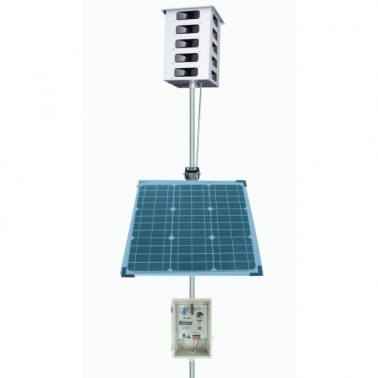
When crows are present in crops, maize fields, warehouses, roofs, farms, silos or industrial sites, the treatment should be based on a system that acts on their natural behaviour. BirdGard bioacoustic bird repellers are especially suitable for these birds because they reproduce alarm calls and predator sounds that crows interpret as danger signals.
This page helps you identify whether the problem is really crows or similar corvids, which equipment to choose and how to combine bioacoustic sound with other resources when bird pressure is high. To see more species, return to Bird Species; for all sound systems, see Sonic Bird Repellers.
Which solution to choose for crows and corvids
| Problem |
Recommended solution |
Comment |
| Crows in crops, farms or agricultural fields |
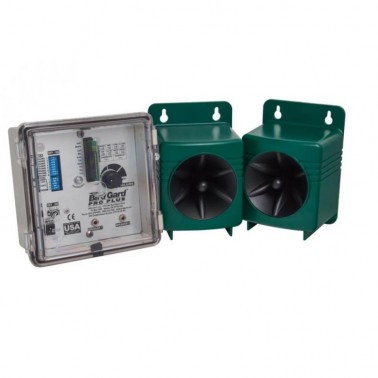
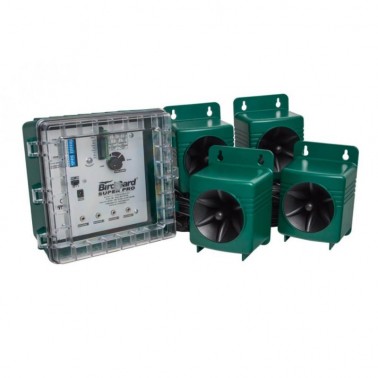
Bird Gard Pro, Bird Gard Pro Plus, Bird Gard Super Pro or Bird Gard Super Pro Amp - Mega Blaster Pro |
Bioacoustics should be the basis. Choice depends on area and bird pressure. |
| Crow attacks in maize fields or seedbeds |
BirdGard installed from the start of the problem |
Act before crows become used to feeding in the area. |
| Crows on warehouses, roofs or industrial sites |
Bird Gard Pro Plus or Bird Gard Super Pro |
Speakers can be aimed at roosting, entry, feeding or resting zones. |
| Rooks, carrion crows or jackdaws |
BirdGard or Bird Sound Repeller MultiSound BS-20L |
Although not exactly crows, they are usually handled with a similar corvid strategy. |
| Multi-species bird problem |
Bird Sound Repeller MultiSound BS-20L |
Useful acoustic option when the problem is not limited to crows. |
| High pressure or habituation risk |
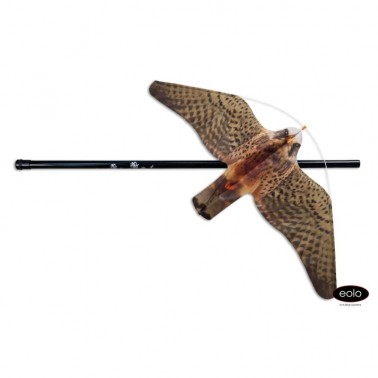
BirdGard + Hawk ScareCrow - Eolo |
Combining bioacoustic sound with moving visual pressure can reinforce the effect. |
| Occasional trapping in specific cases |
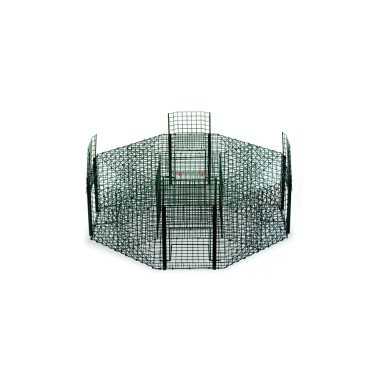
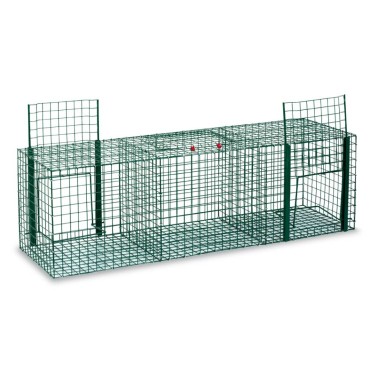
Trap Cage for Magpies, Pigeons, Crows - Octagonal or Trap Cage for Pigeons, Magpies, Crows - 3 compartments |
Only when legally appropriate and for specific cases. It does not replace repelling over large areas. |
Crow, rook, carrion crow and jackdaw: how to identify the bird
Customers often speak about “crows” when the birds may actually be rooks, carrion crows, jackdaws or other black birds that resemble crows. For choosing a solution, exact identification is not always essential, but it is useful to know that they all belong to the corvid group and share key traits: intelligence, memory, social behaviour and the ability to get used to repetitive stimuli.
| Bird |
How to recognise it broadly |
Recommended treatment |
| Crow |
Usually large and black, with a strong beak and very intelligent behaviour. It may appear alone, in pairs or in groups. |
BirdGard bioacoustic repeller as the main solution. |
| Carrion crow |
Very similar to the crow, usually a little smaller, and often confused with it. |
Similar treatment: bioacoustics and sustained pressure. |
| Rook |
Black corvid often seen in groups, fields and open agricultural areas. |
BirdGard or MultiSound, with visual reinforcement if pressure is high. |
| Jackdaw |
Smaller than a crow and very social. It may form flocks and use buildings, roofs or roosting points. |
Bioacoustics aimed at roosting, resting or feeding zones. |
If you are comparing rook and crow, carrion crow and crow, or you have a black bird similar to a crow, the control approach is often similar when it is a corvid. Static methods tend to fall short; bioacoustic sound, good placement and persistence matter more.
Why crows are difficult to repel
Crows and other corvids are especially intelligent birds. They learn from experience, observe their environment and can become used to stimuli that do not change or are not linked to a real threat. Traditional scarecrows, fixed figures or simple visual solutions often lose effectiveness quickly.
Often the issue is not a single visit but a routine: crows have found food, shelter, roosting places or an attractive crop and keep returning. The longer they have been using the area, the harder it can be to move them away.
For effective crow control, act early, maintain pressure for several weeks and use stimuli that birds interpret as risk signals.
Why BirdGard works especially well against crows
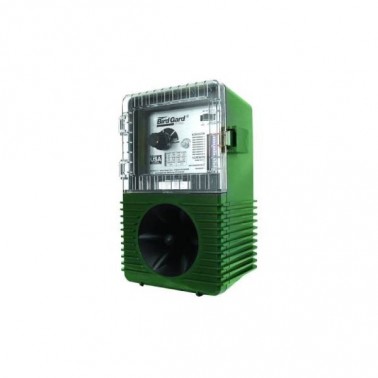
BirdGard bioacoustic repellers reproduce alarm calls and predator calls. These sounds do not simply annoy birds; they trigger a natural alert and escape response. For crows, rooks, carrion crows and jackdaws, this is usually more suitable than ultrasound or static scarecrows.
Bioacoustics are particularly useful in crops, maize fields, farms, agricultural holdings, warehouses, landfills, silos, roofs and industrial sites where a wide area must be covered and pressure maintained long enough.
BirdGard systems can work with different speaker and coverage configurations, making it easier to adapt the solution to the site size and type of problem.
Which BirdGard system to choose
| Product |
Approximate coverage |
When to choose it |
| Bird Gard Pro |
Up to 0.6 hectares |
Specific zones, small farms, localised crops or clearly defined feeding and roosting points. |
| Bird Gard Pro Plus |
Up to 1.2 hectares |
Larger surfaces or when two speakers need to be aimed at different zones. |
| Bird Gard Super Pro |
Up to 2.4 hectares |
More important problems, greater coverage or sites requiring higher sound pressure. |
| Bird Gard Super Pro Amp - Mega Blaster Pro |
Up to 12 hectares |
Large agricultural areas, extensive crops or demanding situations with high bird pressure. |
The right system depends on surface area, environment, distance to neighbours, bird pressure and the possibility of aiming speakers correctly. If you are unsure, contact us before buying and we will review your case.
MultiSound BS-20L as an acoustic alternative
In addition to BirdGard, the Bird Sound Repeller MultiSound BS-20L can be an interesting alternative when the problem is not limited to crows or when you need an acoustic device for several bird species.
When crows are mixed with other birds, or when a multi-species solution is needed for a warehouse, farm, estate or open site, MultiSound can be considered as an acoustic complement or alternative depending on the case.
Hawk ScareCrow - Eolo as visual reinforcement
For crows, bioacoustic sound should be the basis of the treatment. Even so, in open areas, crops, roofs or farms, a moving visual stimulus can reinforce the effect.
The Hawk ScareCrow - Eolo simulates a bird of prey in flight and can help as a complement, especially with a BirdGard unit. It is not a replacement for bioacoustic sound against crows, but a reinforcement to reduce habituation and increase the feeling of threat.
Real success cases repelling crows and corvids
One strength of BirdGard for crows is that there are real-use references in different contexts. These examples help show how systems are applied and why bioacoustics can be effective against corvids.
These cases show that the problem is often not solved with one isolated stimulus, but with a well-placed strategy maintained over time and adapted to bird behaviour.
How to install and use a crow repeller correctly
The effectiveness of a bioacoustic device depends heavily on installation. A good system placed poorly can perform worse than a smaller system placed correctly.
- Aim speakers at activity zones: crops, roosts, roofs, entries, silos or feeding points.
- Act early: install the system at the start of the problem, before crows settle in.
- Use the right volume: enough to cover the area, adapted to the environment and nearby homes.
- Maintain pressure for several weeks: corvids may need time before leaving the area.
- Change orientation or configuration if habituation appears: variation helps prevent birds getting used to it.
- Combine with visuals when pressure is high: Hawk ScareCrow - Eolo can reinforce open areas.
- Do not switch the system off too soon: if birds find the area quiet again, they may return.
What usually does not work well against crows
Crows are very intelligent, so some solutions may help briefly but are rarely enough as the main treatment.
- Ultrasound outdoors: not recommended as the main solution for crows in open spaces.
- Traditional scarecrows: they lose effectiveness when birds confirm there is no real threat.
- Owls or static figures: they may impress at first, but corvids get used to them quickly.
- Tape or balloons without rotation: they can help briefly but should not be the basis.
- Acting too late: if the group is settled, it is harder to move.
- Always using the same stimulus: lack of variation favours habituation.
Simple visual solutions can help as a complement, but the basis should be a well-installed bioacoustic strategy.
Trap cages for crows: only in specific cases
Trap cages for crows may make sense in very specific situations, but they should not be the first option for crops, large areas or general corvid problems.
Before using a Trap Cage for Magpies, Pigeons, Crows - Octagonal or a Trap Cage for Pigeons, Magpies, Crows - 3 compartments, check the applicable regulations and make sure use is appropriate for the specific case.
For most crop, warehouse or site problems, we recommend prioritising bioacoustic repelling and using cages only when legally appropriate and with a clearly defined objective.
Frequently asked questions about repelling crows
What is the best crow repeller?
For crows and other corvids, BirdGard bioacoustic repellers are usually the most suitable option because they emit alarm and predator sounds that birds interpret as danger signals. The choice between BirdGard Pro, Pro Plus, Super Pro or Super Pro Amp depends on area and bird pressure.
Do BirdGard systems work against crows?
Yes. BirdGard systems work especially well on crows, rooks, carrion crows and jackdaws when installed correctly and aimed at activity zones. They are more suitable than static solutions because they act on natural bird behaviour.
How do I repel crows from a crop?
The most effective approach is to install a bioacoustic repeller before the group is settled, aim speakers at the affected crop area and keep the system active for several weeks. When pressure is high, Hawk ScareCrow - Eolo can reinforce the strategy.
How do I repel crows from a maize field?
In maize fields, act early before crows make the crop a regular feeding area. BirdGard Pro, Super Pro or Super Pro Amp can be used depending on surface area and pressure.
Do ultrasonic devices repel crows?
We do not recommend them as a crow solution outdoors. Ultrasound has many limitations in open spaces. For crows and corvids, bioacoustics are usually much more suitable.
Do crows get used to repellers?
They can get used to simple or repetitive stimuli, especially when there is no real threat. Use suitable sounds, aim speakers well, maintain pressure and vary configuration or add visual reinforcement when needed.
What is the difference between crows, rooks, carrion crows and jackdaws?
They are different species within the corvid group, with differences in size, appearance and behaviour. For repelling, they are usually handled similarly: bioacoustics, sustained pressure and visual reinforcement when needed.
Which BirdGard system do I need by area?
As a guide, BirdGard Pro covers up to 0.6 hectares, BirdGard Pro Plus up to 1.2 hectares, BirdGard Super Pro up to 2.4 hectares and BirdGard Super Pro Amp up to 12 hectares. Site shape, obstacles, bird pressure and environment also matter.
Can I combine sound and visual deterrents?
Yes. With crows, bioacoustic sound should be the basis, but Hawk ScareCrow - Eolo can reinforce crops, farms, roofs or open areas. Combining stimuli helps reduce habituation.
Can trap cages be used for crows?
Only in specific cases and always after checking applicable regulations. For crops, warehouses or large areas, we normally recommend bioacoustic repelling before capture.
Crow repelling solutions at BirdGard Iberia
At BirdGard Iberia we specialise in solutions for repelling crows, rooks, carrion crows and jackdaws. For most cases, we recommend BirdGard bioacoustic systems, MultiSound BS-20L for multi-species problems and Hawk ScareCrow - Eolo as reinforcement when bird pressure is high or habituation risk exists. If you are unsure which system you need, contact us and we will advise you free of charge.

 63 reviews