
Visual Bird Repellers
 57 reviews
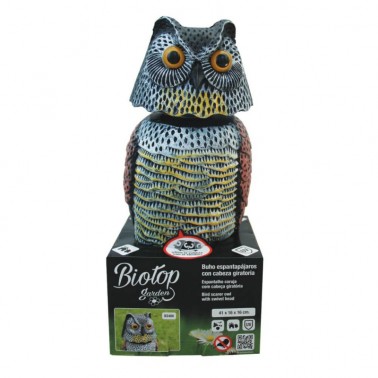

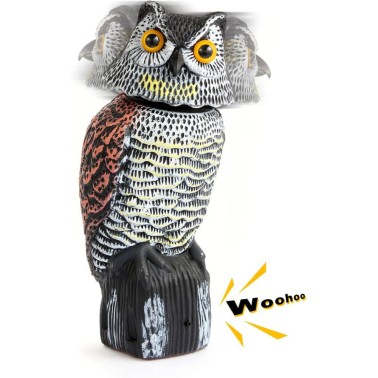
Scarecrow Owl - Rotating Head and Sounds
Price
€36.18
The head rotates with the wind. A battery-operated sensor activates the emission of sounds.



Solar Sonic Bird Repeller - WK0109
Price
€99.28
With integrated solar panel. Emits predator sounds and light flashes. Coverage: 400 m².
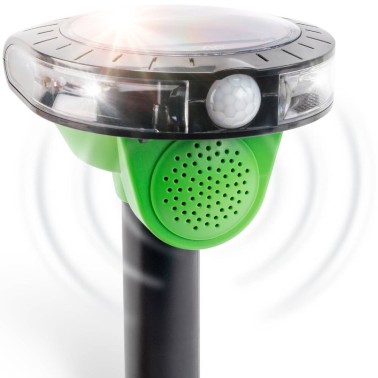
Solar Bird Repeller – Sound and LED Flash
Price
€32.09

Coverage of up to 60 m². Ideal for balconies and small orchards
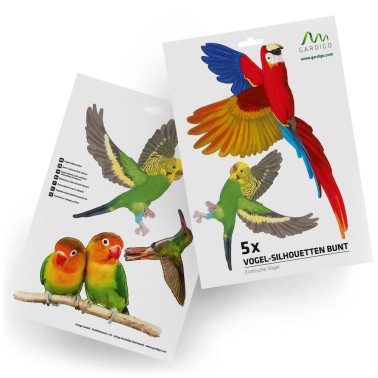
- Promotion
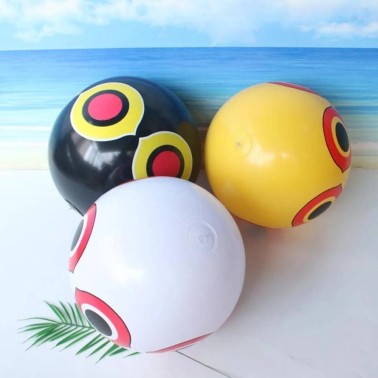
Scare Eye Balloons 3-Pack
Regular price
€43.56
-€17.01
Price
€26.55

3D balloon eye replicas that move with the wind
- Out-of-Stock
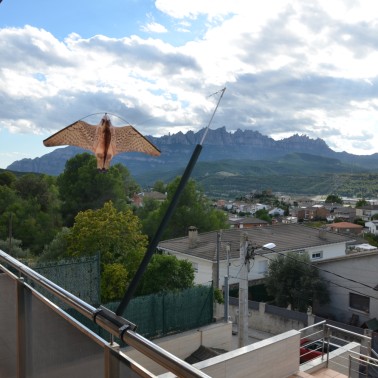
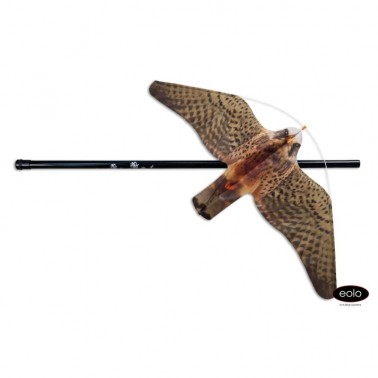
Eolo Hawk ScareCrow for Balcony
Price
€85.91
The same Hawk ScareCrow as always, but now for balconies
Visual Bird Scare Devices: Hawks, Owls, Bird Tape and Scare Balloons
Visual bird deterrents, also known as bird scare devices, visual scarecrows or bird scarers, use visual stimuli to make birds perceive an area as unsafe. They can simulate predators, generate movement, reflections, flashes, silhouettes or shapes that disturb pigeons, seagulls, sparrows, starlings, blackbirds, crows and other birds.
Not all bird scare devices work in the same way. Completely static figures can lose effectiveness over time because birds may eventually get used to them. That is why, in this category, we prioritise solutions with realism, movement, reflections or visual variation, which are much harder to ignore than a fixed figure placed always in the same spot.
Visual bird deterrents are a silent, chemical-free solution, ideal for balconies, terraces, gardens, vegetable gardens, fruit trees, roofs, flat roofs and outdoor areas. They can also be used to reinforce other types of bird repellers, especially when the problem affects a wide area or the birds are already very used to the location.
Types of Visual Bird Scare Devices
Within visual bird deterrents, there are several product families. The choice depends on the environment, the species and whether you need movement, reflections, realism or a simple solution for a specific point.
| Type of bird scare device | How it works | Where it usually fits |
|---|---|---|
| Predator silhouettes | They imitate the presence of owls, eagles or other birds of prey. Versions with moving heads, wings or reflections usually resist habituation better. | Gardens, vegetable gardens, roofs, balconies, terraces, porches and outdoor areas. |
| Flying scare devices and kites | They simulate the flight of a hawk through real movement caused by the wind. | Crops, farms, gardens, industrial buildings, roofs and open areas. |
| Reflective bird tape | It creates flashes, vibration and movement with the wind. | Vegetable gardens, fruit trees, vineyards, crops, balconies, terraces and trees. |
| Balloons with predator eyes | They use visible shapes and threat eyes to create visual pressure. | Gardens, vegetable gardens, fruit trees and small or medium crop areas. |
| Wind spinners | They provide constant movement and reflections when there is a breeze. | Balconies, terraces, gardens, plant pots and small outdoor areas. |
| Hybrid visual and sonic devices | They combine visual stimuli with sound, LED flash or other reinforcement effects. | Balconies, small vegetable gardens, gardens and specific areas where an additional stimulus is needed. |
| Anti-collision window decals | They are not designed to scare birds away, but to make glass visible and reduce bird strikes against windows. | Windows, glass surfaces, glazed terraces and reflective façades. |
Which Bird Scare Device to Choose Depending on the Environment
The installation point and the behaviour of the birds are key to choosing correctly. Protecting a balcony is not the same as protecting a crop, a roof, a vegetable garden, a glass surface or an area with pigeons that are already very used to the place.
| Environment | Common problem | Options you can consider |
|---|---|---|
| Balconies and terraces | Pigeons or other birds approaching railings, plant pots, awnings or visible points of the home. | Rotating Head Owl - Garden Owl, Bird-Scare Wind Spinners or anti-perching solutions if the problem is birds landing on a specific point. |
| Vegetable gardens and gardens | Birds approaching fruit, seeds, trees or feeding areas. | Hawk ScareCrow - Eolo, Bird Tape - EcoBirdNex, scarecrow owls, Eagle Scarecrow or reflective bird tape. |
| Fruit trees, vineyards and crops | Birds accessing fruit, shoots, seeds or outdoor feeding areas. | Holographic Bird Tape, Bird Tape - EcoBirdNex, Scare Eye Balloons 3-Pack or Hawk ScareCrow - Eolo. |
| Roofs, flat roofs and open areas | Birds flying over, perching or using the area as a recurring resting point. | Hawk ScareCrow - Eolo, predator figures or visual deterrents combined with sonic bird repellers if the problem is already established. |
| Windows and glass surfaces | Birds colliding with glass because they do not properly perceive the surface. | Window Decals for Birds. |
| Boats and coastal areas | Seagulls or other coastal birds approaching decks, pontoons or exposed areas. | StopGull Falcon - Hawk Kite or specific bird deterrents for boats. |
| Persistent problems or birds highly used to the area | Birds are already attached to the area and do not respond in the same way to a single stimulus. | Combine visual deterrents with sound, prior cleaning, anti-perching or access blocking. |
Birds of Prey Figures to Scare Pigeons and Other Birds
Many people look for birds of prey to scare pigeons or predator bird figures to make pigeons and other birds perceive an area as dangerous. This family includes scarecrow hawks, owls and eagles.
The Hawk ScareCrow - Eolo is one of the most representative visual systems because it simulates the flight of a hawk in the protected area. Its movement with the wind creates a more realistic signal than a static figure.
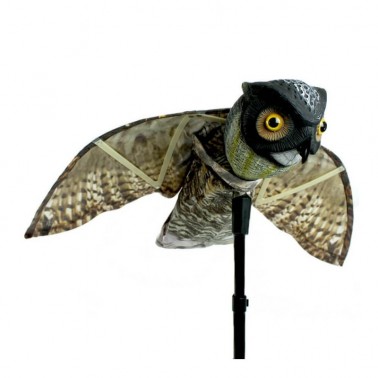
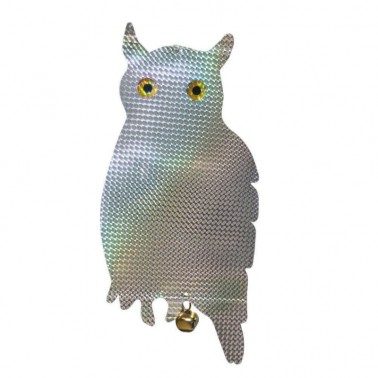
Scarecrow owls can also help create visual pressure on birds. The Prowler Owl includes wings that move with the wind, while the Rotating Head Owl - Garden Owl adds head movement and reflective eyes.
You can also consider the Bird Blinder Reflective Hanging Owl, the Eagle Scarecrow or the Scarecrow Owl - Rotating Head and Sounds, which combines visual stimulus with sounds activated by a sensor.
Scarecrow Hawks and Visual Kites
Scarecrow hawks and visual kites are especially useful in open areas, where the movement of the system can be seen from a certain distance. They work well in crops, vegetable gardens, gardens, roofs, industrial buildings or outdoor areas exposed to the wind.
The movement of the hawk reinforces the sense of threat. It can also be combined with sonic bird repellers: on the one hand, birds hear predator sounds; on the other, they see a figure that reinforces that danger signal in the area.
The Eolo Hawk ScareCrow for Balcony adapts this concept to handrails and terraces. It may currently appear temporarily out of stock; the product page allows you to check availability, technical information, videos, reviews and future restocking.
Reflective Bird Tape, Scare Balloons and Bird-Scare Wind Spinners
Tapes, balloons and wind spinners are simple visual solutions to generate movement, brightness and discomfort signals. They are especially useful in vegetable gardens, trees, crops, gardens, balconies or terraces where several stimuli need to be distributed without installing a complex device.
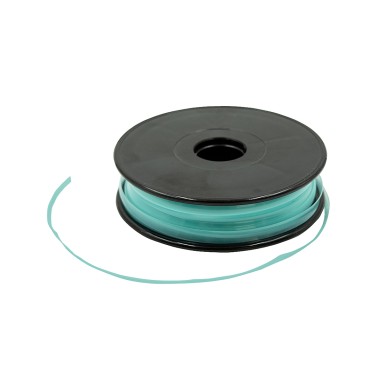
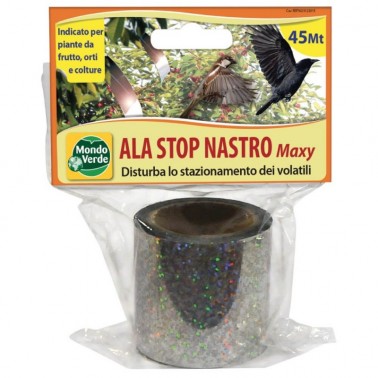
The Holographic Bird Tape moves with the wind and reflects light, generating a visual effect that can help deter birds. The Bird Tape - EcoBirdNex combines optical and acoustic effects and is available in longer rolls.
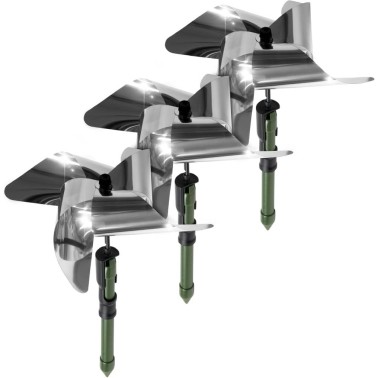
The Scare Eye Balloons 3-Pack provide visible shapes and threat eyes that can be placed at different points of the area to be protected. The Bird-Scare Wind Spinners add movement and reflections on balconies, terraces and gardens.
Visual Bird Deterrents with Sound or Flash
Some products combine visual stimulus with sound, LED flash or other reinforcement effects. This combination can be useful when a simple visual figure is not enough or when you want to reinforce the deterrent effect in gardens, balconies, small vegetable gardens, roofs or specific areas.
The Solar Bird Repeller – Sound and LED Flash combines sounds and light flashes, with an approximate coverage of up to 60 m². It can be an option to consider on balconies, small vegetable gardens, gardens or specific areas.
The Solar Sonic Bird Repeller - WK0109 combines birds of prey sounds with high-intensity LED flashes. It has an approximate coverage of up to 400 m² and can work in automatic mode or with a PIR sensor, activating when it detects movement. Although it is mainly a sonic bird repeller, the visual reinforcement with light allows it to be included among hybrid solutions with visual stimulus.
There are also visual figures with sonic reinforcement, such as the Scarecrow Owl - Rotating Head and Sounds, which includes movement and sounds activated by a sensor.
Anti-Collision Window Decals for Birds
Not all visual products are designed to scare birds away from an area. Some, such as Window Decals for Birds, are designed to prevent birds from colliding with windows, glass surfaces or reflective surfaces.
This type of solution is especially useful in homes, glazed terraces, offices, buildings with large glass surfaces or areas where birds do not correctly detect the glass.
Visual Bird Deterrents vs Sonic Bird Repellers
Visual bird deterrents are usually silent and can be installed in gardens, terraces, vegetable gardens, balconies, roofs or areas where acoustic disturbance is not desired. They work especially well when there is movement, reflection or a credible visual threat.
Sonic bird repellers, on the other hand, are usually more suitable for large surfaces, industrial buildings, crops, industrial facilities or areas where deterrent pressure needs to be generated over a larger area.
In many cases, combining both methods improves the result. The combined effect creates greater coherence for birds: they hear predator sounds and, at the same time, see a visual threat in the area.
How to Increase Effectiveness and Prevent Birds from Getting Used to the Deterrent
The main enemy of a visual bird deterrent is habituation: if the bird realises that there is no real danger, it may stop reacting. To maintain the effect, it is advisable to follow some basic guidelines.
- Prioritise movement: figures with moving heads or wings, kites, reflective tapes and wind spinners usually resist habituation better than a fixed silhouette.
- Change the position from time to time: relocating the visual scare device helps prevent birds from interpreting it as a harmless object.
- Install it before the problem becomes established: prevention is easier than removing birds that already have food, nests or shelter in the area.
- Combine several stimuli: combining visual deterrents with sound, anti-perching or physical barriers provides more complete deterrence.
- Remove attractants: clean food remains, fallen fruit, droppings, feathers, nests or signs of presence that invite birds to stay.
- Choose according to the species and environment: dealing with pigeons on a balcony is not the same as dealing with seagulls on a roof or birds in a crop.
Visual Bird Deterrents by Species
Visual scare devices can be used against different species, but their effectiveness depends on the environment, the level of habituation and the type of stimulus used.
- Pigeons: they may respond to hawks, owls, eagles, tapes or balloons, although if they always perch on the same point, it may be necessary to combine them with anti-perching. You can also visit the section on how to repel pigeons.
- Seagulls: they usually require visible stimuli, with movement and adapted to outdoor areas. In coastal areas or boats, you can also visit repel seagulls and bird deterrents for boats.
- Thrushes, starlings and blackbirds: in fruit trees, vineyards and crops, reflective tapes, balloons and scarecrow hawks can form part of the strategy. You can find more information in starlings and thrushes or blackbirds.
- Sparrows: if the problem affects an industrial building or indoor area, it may be necessary to combine visual deterrents with sound or access blocking. See also repel sparrows.
Frequently Asked Questions about Visual Bird Scare Devices
What is a visual bird scare device?
It is a system that uses visual stimuli, such as movement, reflections, predator figures, threat eyes, shiny tapes or kites, to make birds perceive an area as unsafe.
Do visual bird deterrents really work?
Yes, they can work well in many cases, especially if they have movement, reflections or realism. Completely static figures usually lose effectiveness sooner because birds may get used to them.
Which is better, a scarecrow hawk or a scarecrow owl?
It depends on the space and the type of bird. A hawk-shaped kite can be more interesting in open areas because it simulates flight. An owl may fit better in gardens, terraces, roofs or points where a visible predator figure is needed.
Do visual bird scare devices work for pigeons?
Yes, they can help deter pigeons, especially as part of a combined strategy. If pigeons always perch on the same point, it may also be necessary to add an anti-perching solution.
Do they work for seagulls?
Yes, but for seagulls it is usually important to use visible stimuli, with movement and adapted to the environment. In coastal areas, boats or roofs, it may be advisable to combine them with sound or specific solutions for seagulls.
Where should visual bird scare devices be placed?
They should be placed in points that are visible to the birds and close to the area you want to protect. In general, it is advisable to install them where they have movement, good exposure to wind or sufficient visibility.
Do birds get used to scare devices?
They may get used to them if the stimulus is always the same and remains fixed. To reduce this risk, it is advisable to use products with movement, change the location when possible and combine several methods if the problem is already established.
Can they be combined with sonic bird repellers?
Yes. Combining sound and visual stimulus can reinforce effectiveness, because birds hear danger signals and see a visual threat in the same area.
Is it better to buy a scarecrow hawk or make one at home?
A homemade system may work as an occasional test, but scarecrow hawks designed for outdoor use usually offer greater realism, movement, stability and resistance to wind and weather.
Do visual bird deterrents harm birds?
No. They are deterrent systems: they act on the bird’s perception of risk so that it moves away, without using poisons or chemicals.
More Information
If you would like to explore this topic further, we recommend these articles from our blog:
If you have doubts about which model fits your case, you can contact our team.